
Digital Nomad Tech Essentials: What Actually Matters When Your Business Is Already Running
You have watched the gear videos. The ring lights, the noise-cancelling headphones, the mechanical keyboard someone swears "changed everything". So you bought some of it, and here you are, still stuck. The income hasn't moved, the freedom you pictured hasn't arrived, and now you also own a drawer of cables you never use.
Here is the plain version: your digital nomad tech essentials are not the thing standing between you and the business you wanted. Tech is the support crew, not the plot. When you are already in business but not where you meant to be, buying more equipment is usually just a comfortable way to avoid the harder question underneath.
I have run a business from 60-plus countries. I have worked from a $250-a-month apartment in Fethiye, house-sat my way through more than 80 homes, and filmed content in kitchens I didn't own. I promise you it was never the camera that decided whether the month paid.
What are the real digital nomad tech essentials?
The real digital nomad tech essentials are the small number of tools that keep you connected, paid, and protected anywhere in the world: reliable internet, a work-capable laptop, a way to get online when the wifi fails, secure logins, and a payment system that works across borders. Everything past that is optimisation, not survival.
Notice what is on that list and what isn't. It is boring on purpose. Nothing about it is a personality. The founders I know who actually travel and get paid have unremarkable setups and remarkable habits.
When I left Australia in January 2016, I sold a whole life into piles marked Sell, Keep, Donate and Trash. A lifetime of possessions went for about $10,000. I did not leave with a studio. I left with a laptop and a decision.
The five that genuinely matter
- Internet you can rely on. Local eSIM plus a backup. This is the one thing worth spending on.
- A laptop that handles your actual work - not the most expensive one, the right one for what you make.
- An offline fallback. A hotspot device or a second SIM so a dead router is never a dead workday.
- A password manager and a VPN. Your logins are your income. Protect them like it.
- A payment system that works everywhere. Getting paid across currencies without losing a fortune to fees.
If you have those five, you have everything the lifestyle actually requires. The rest is preference dressed up as necessity.

Why the gear never fixed the stuck feeling
Buying tech feels like progress because it is measurable. You can hold it. You can tell yourself the next tool is the missing piece. Meanwhile the real problem - what you sell, to whom, and why they buy - sits untouched.
I know this pattern intimately because my brain runs on novelty. I was diagnosed with ADHD in 2023, and it explained years of my life. New tools, new tabs, new "systems" all give the same little hit as a new idea. I used to call it working. It was often just moving.
My honest line about all those early years is that I did the right things in the wrong order. I chased shiny before I built solid. If your setup keeps growing but your income doesn't, that is worth sitting with. The tech is easy. The discipline of picking one thing and staying on it is what most of us are actually avoiding.
Remote work is not niche anymore, either. A 2023 McKinsey survey found that 58% of employed Americans reported being able to work from home at least part of the week. The location freedom is available to almost everyone now. Which means the gear was never the moat. The offer is.
How do you tell essential tech from expensive distraction?
Ask one question before any purchase: will this directly help me make, sell, or deliver the thing that pays me this month? If the honest answer is "sort of" or "eventually", it is a distraction wearing a productivity costume.
A better camera does not fix an offer nobody wants. Faster software does not fix silence in your inbox. I have seen women with beautiful setups and empty calendars, and women running six figures off a three-year-old laptop and a phone.
My cake business taught me this the hard way. Cakes by Karen started as an accidental Facebook page when my daughter was eight weeks old - 100 followers and nine orders in 48 hours. It grew to a commercial kitchen, around 50,000 followers and multiple six figures.
I had all the equipment. Top-tier ovens, tools, the lot. And it still became a prison of 70 to 80 hour weeks while copycats undercut me until I was nearly working for free. The gear was flawless. The model was broken. No amount of kitchen kit was going to fix a business that priced my life to zero.
The buy-it test I use now
Before I spend, I make myself name the last three things I bought to help the business and whether I still use them. It is humbling. Most of the time the answer proves the pattern - I was buying momentum I could have had for free by just finishing something. If that stings, my take on what your unfinished projects are really costing you is worth a read.
The digital nomad tech essentials that earn their keep
Now the useful part. Once your offer is working, a few tools genuinely buy back your time - and these are the digital nomad tech essentials I would actually defend.
- A payment platform that handles multiple currencies. Tools like Wise or Stripe stop you bleeding money on conversion every time you get paid from another country.
- Cloud everything. Your files, your work, your logins - synced, so a lost or stolen laptop is an annoyance, not a disaster.
- A VPN. For security on café wifi and for reaching your own banking and services from anywhere.
- One scheduling tool. Not five. One that lets people book you without the email tennis across time zones.
- A simple email platform. Because your list is the one asset nobody can delete on you.
That last one is personal. Facebook deleted a community of 13,000 families of mine overnight, no warning. That is the day I stopped building only on rented land. Own your list, own your payment flow, own your files. Borrow everything else.
If you are still weighing whether the mobile version of your business even suits you anymore, I dug into that in my honest look at why the laptop lifestyle isn't the problem - your stuck business is. The tech rarely is.

Do you need a fancy setup to work while travelling?
No. You need a working setup, and there is a difference. A working setup is anything reliable enough that your clients never know where you are. A fancy setup is what we buy ourselves when we want to feel like a real business without doing the scary part of getting sold.
Some of my best-paid months happened on the most ordinary equipment. What changed was not the gear. It was that I finally decided what I sold and to whom, and stopped rebuilding the foundations every time I got bored.
I have world-schooled my kids across continents on this. My daughter Sienna ran a boutique hotel's front of house at 10. My dog Ella, a Panamanian street rescue, is about to land in her fifth country. None of that required a studio. It required an offer that pays and a life stripped down to what we actually use - I once got my husband Cam to agree to carry-on luggage only.
So where should your energy actually go?
Into the money-making core, not the accessories. Get your five essentials solid, then leave the gear alone and go work on the part that is actually stuck: your offer, your pricing, your audience.
If you cannot say in one sentence what you sell, who it is for, and why they would pay you specifically, no laptop on earth fixes that. That is the sentence I would spend your next week on, not your next order. The freedom I have now only arrived when I finally focused - and focus is free.
Frequently Asked Questions
What tech do I really need to run a business as a digital nomad?
Five things: reliable internet with a backup, a work-capable laptop, an offline connection fallback, secure logins via a password manager and VPN, and a payment system that works across currencies. Everything else is optional.
Should I buy a better camera or laptop to grow my income?
Usually not. Better gear does not fix a weak offer or an audience that isn't buying. If your current setup lets clients get what they paid for, spend your energy on selling, not upgrading.
How do I get paid while travelling between countries?
Use a multi-currency payment platform such as Wise or Stripe so you are not losing money to conversion fees, and keep your invoicing and banking accessible through a VPN wherever you are.
Why isn't my freedom business paying me even though I have the right tools?
Because tools were never the bottleneck. The stuck part is almost always the offer, the pricing, or the lack of focus - the pieces gear can't fix. That is where the work actually is.
You are not stuck because you are missing a gadget. You are stuck because the money-making core needs your attention and buying things feels safer than facing it. If you want an honest look at exactly where your business is jammed and what to change, run through my Reality Check and start there - the freedom is on the other side of focus, not another order.
Karen King, Founder of The Escapepreneur® & ESC Hub
Karen King is the founder of The Escapepreneur® and the woman behind the term. After burning out running a six-figure cake business in Australia, she sold everything, left the country, and spent the last 10 years building a freedom-based business across 60+ countries. On No More Somedays, she writes for the online business owner who is smart, tired, and done with waiting for someday to arrive. Honest, practical, zero hype.
Take the Reality Check
Working hard but going nowhere? Answer 10 quick questions and find out what's really been holding you back — and where to start.
Start My Reality Check →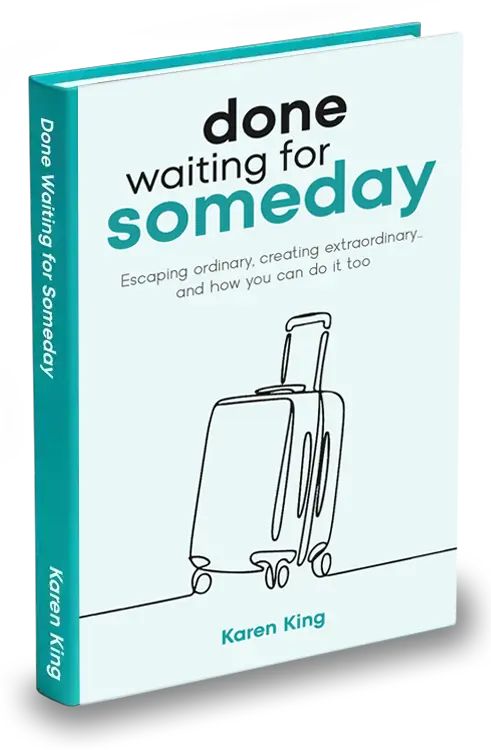
Done Waiting for Someday
The step-by-step path to turning the business you have into the freedom you want.
Get the book →Join The Escape Club
Support, accountability and a room full of people building freedom-first businesses alongside you.
Join the Club →