
How to Make Business Decisions Without Perfect Information (When You're Already Stuck)
You've been sitting on the same decision for weeks. Maybe it's the new offer, the pricing change, the pivot you keep circling but never commit to. You tell yourself you're being responsible, that you just need a bit more data first. But if you're honest, you've been "researching" the same move for longer than it would have taken to just try it. Learning how to make business decisions without perfect information is the thing standing between where you are now and the money and freedom you built this business for.
I know that gap intimately. I spent years being ambitious, curious, and broke at the same time. Not because I wasn't working - because I kept waiting to feel sure before I moved. The sureness never came. It came after.
How do you make business decisions without perfect information?
You make business decisions without perfect information by deciding what you're actually optimising for, setting a deadline, choosing the option that's cheapest to reverse, and treating the result as data rather than a verdict on you. Perfect information doesn't exist in business - waiting for it is just fear wearing a sensible outfit.
That's the whole thing, really. The women I talk to who are stuck aren't stuck because they lack intelligence or options. They're stuck because they've confused "being careful" with "being right," and the two are not the same.
When I was 17 I went to Bolivia as an exchange student with roughly four sentences of Spanish. That is not enough information to move to another continent. I went anyway and came home a year later fluent and far surer of myself. I said yes before I was ready, and the readiness showed up along the way. Business is the same. You don't get certainty and then act. You act, and certainty is the thing you build from what you learn.

Why "I just need more information" is usually fear in disguise
Here's the uncomfortable part. Most of the time, more information wouldn't change your decision. You already know what you want to do. You're just scared to be wrong, so you keep gathering evidence to delay the moment you have to commit.
I call this the responsible-looking stall. It feels like diligence. It looks like diligence to everyone watching. But underneath, it's the same paralysis as doing nothing - you've just dressed it up as homework.
Research backs this up. Studies on "analysis paralysis" show that beyond a certain point, more options and more data actually reduce the quality and speed of decisions rather than improving them, because the cognitive load overwhelms your ability to choose at all. The psychologist Barry Schwartz has written extensively about this in research on how too much choice makes us worse off. The more you gather, the harder it gets - not easier.
So the question isn't "what else do I need to know?" The question is "what am I afraid will happen if I'm wrong?" Answer that honestly and the stall usually dissolves.
What perfect information actually costs you
Every week you spend not deciding is a week your business doesn't grow. That's the cost nobody puts on the spreadsheet.
When I ran Cakes by Karen, I was busy out of my mind - 70 to 80 hour weeks - and still almost working for free because copycats kept undercutting my prices. For far too long I "thought about" putting my prices up. I gathered opinions. I worried I'd lose customers. Meanwhile I was running myself into the ground for money that barely covered the flour.
The information I was waiting for didn't exist. There was no spreadsheet that would tell me in advance exactly how many customers I'd lose. I had to just raise the prices and watch what happened. That's often where the real problem hides - not in the decision itself, but in refusing to look at whether you're busy or actually profitable. Motion is not the same as progress.
The cost of waiting for perfect information is almost always higher than the cost of a decision that turns out to be slightly wrong. A wrong decision teaches you something in a week. Indecision teaches you nothing and charges you for the privilege.
How to make business decisions without perfect information: the method I actually use
This is the part that changed things for me once I finally focused instead of starting a new thing every few months - the ADHD tax I paid for years. Here's the framework, step by step.
1. Name what you're optimising for
Before you weigh any option, decide what "good" means for this specific decision. Is it more time back? More profit margin? Less admin? A test of demand? You can't make a clean call if you don't know what you're trying to win. Most stuck decisions are stuck because the goal was never defined - you're trying to optimise for everything at once, which means optimising for nothing.
2. Sort the decision into reversible or not
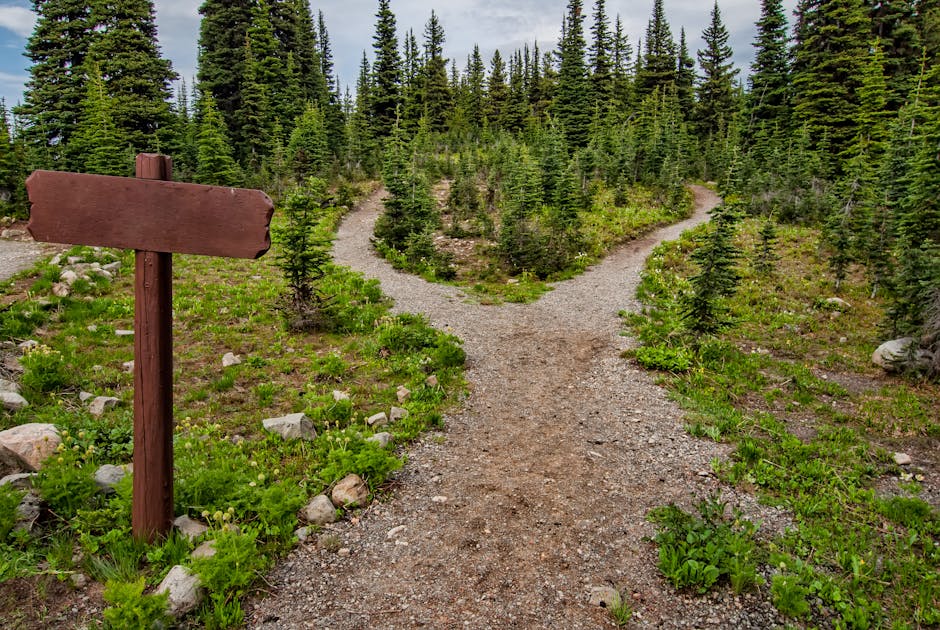
Jeff Bezos splits decisions into two types: one-way doors you can't walk back through, and two-way doors you can. Most business decisions are two-way doors. A new offer, a price change, a different posting schedule - if it doesn't work, you change it back. Treat reversible decisions with the speed they deserve. You're not signing in blood. You're running a test.
3. Set a decide-by date
Give yourself a deadline and an amount of research that's allowed before it. "I will decide by Friday with the information I can gather in three hours." Constraints end the stall. Open-ended thinking expands to fill all the time you give it, and then some.
4. Choose the smallest version you can test
You don't have to launch the whole course. Sell the first module. You don't have to rebrand everything. Test the new positioning on one email. Shrinking the decision shrinks the fear, and the result still tells you most of what you needed to know. This is exactly how I'd approach a new offer now - small, fast, real, rather than perfect and theoretical.
5. Treat the outcome as information, not identity
If it works, do more of it. If it doesn't, you've learned something no amount of research could have told you. Either way you win, because either way you move. The women who break out of being stuck are the ones who stop treating a flopped offer as proof they're not cut out for this. It's data. That's all it is.
What I'd do differently if I were you right now
If you've been circling the same decision for a while - and I don't care whether that's been months or years - I'd stop trying to get it right and start trying to get it moving.
Pick the decision that's been sitting on you longest. The one you avoid thinking about. That's usually the one holding the whole business hostage. Then run it through the five steps above and commit to a decide-by date this week.
When I left Australia in January 2016, I didn't have perfect information. We sorted a lifetime of possessions into sell, keep, donate, trash, sold it all for about $10,000, and left deliberately homeless with no guarantee any of it would work. It did. Sixty-plus countries later, over 80 house sits, two kids world-schooled, and I'm still building - I'm still in the middle of this. The freedom didn't come from certainty. It came from choosing to move with the information I had.
A lot of women in your position think the missing piece is a mentor who'll hand them the right answer. Sometimes what you actually need is a clearer look at why you're stuck before you hire anyone - because a coach can't fix an avoidance habit you haven't named yet.
The fear underneath the fear
Let's go one layer deeper, because the decision isn't really about the offer or the price. It's about what being wrong would mean to you.
For a lot of us, being wrong in public feels like proof we never deserved to try. So we protect ourselves by never fully committing - that way, if it fails, we can tell ourselves we weren't really trying. It's a safe story. It's also the story keeping you exactly where you are.
I was the top home-security salesperson in Australia at 21, on $120k a year, and I wasn't pushy about it. I just genuinely helped people solve a problem, and it never occurred to me that anyone would say no. That mindset - decide, move, help, adjust - is available to you right now. You already know a business can give you freedom. The thing between you and it isn't more knowledge. It's permission to act before you feel ready.
If the real block is that you've lost sight of what you're even building toward, that's worth facing honestly too. It's hard to make a confident call when the vision you set out with has stopped fitting. Fix the direction and a lot of the smaller decisions make themselves.
Frequently Asked Questions
How much information is enough before making a business decision?
Enough to make the decision reversible or cheap to test - not enough to feel certain. For most decisions, gather what you can in a fixed window (say a few hours), then decide. Certainty is not a realistic target.
What if I make the wrong decision?
Most business decisions are reversible. If it doesn't work, you change it and you've gained real information you couldn't have bought with research. A wrong call you can learn from beats an indefinite stall that teaches you nothing.
How do I stop overthinking business decisions?
Set a decide-by date, cap your research time, and choose the smallest version of the decision you can actually test. Constraints end overthinking faster than willpower does.
Is waiting for the right time ever the smart move?
Rarely, and only for genuine one-way-door decisions with high, unrecoverable cost. Everything else is a two-way door, and speed matters more than being right the first time.
How do I know if I'm being careful or just scared?
Ask whether more information would actually change your decision. If the honest answer is no, you already know what to do and you're stalling. That's fear, not diligence.
You don't need perfect information. You need a decision and a deadline. If you want help seeing exactly where you're stuck and what's keeping the money and freedom out of reach, run your business through The Reality Check - it's the fastest way I know to turn circling into a clear next move. The sureness you're waiting for is on the other side of the decision, not before it.
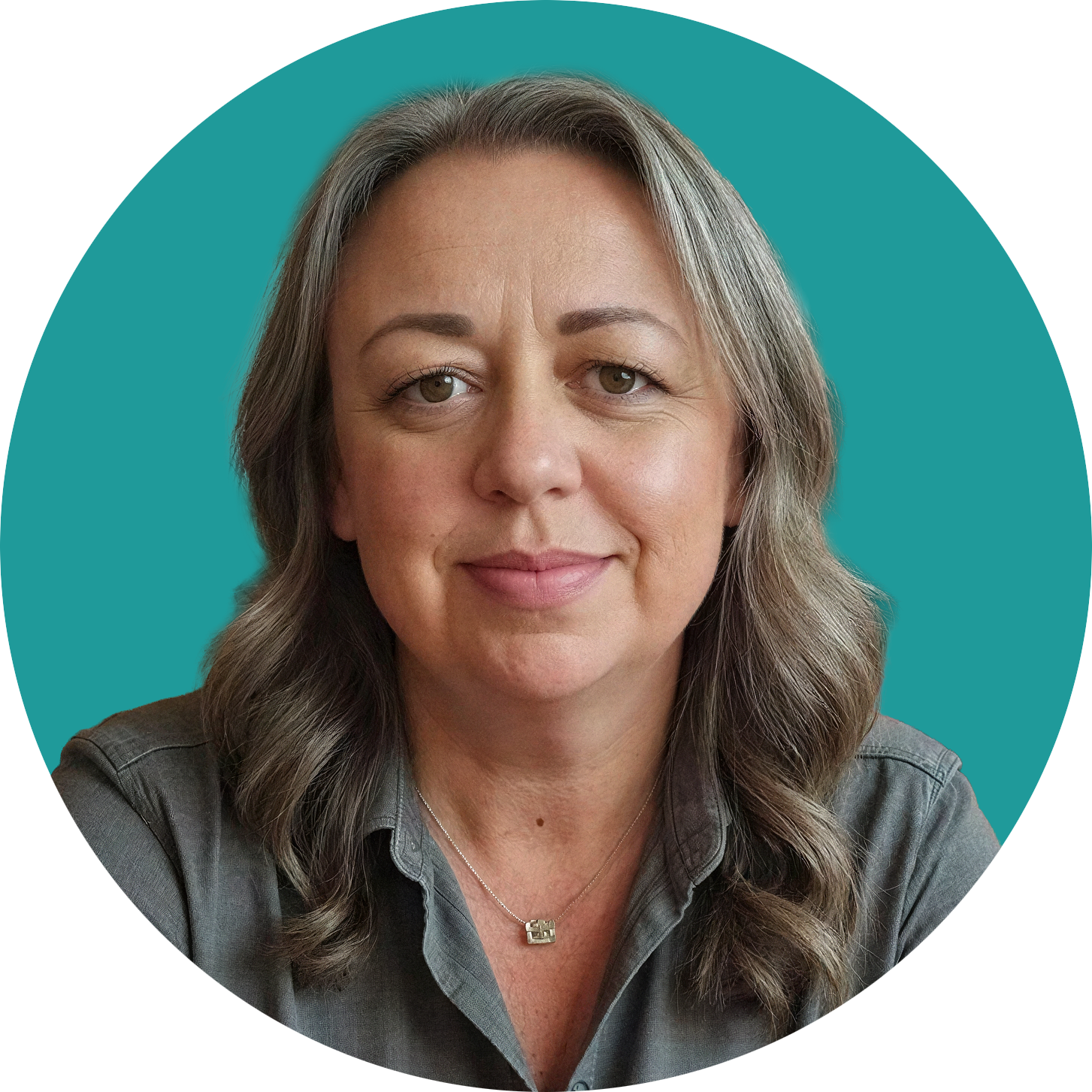
Karen King, Founder of The Escapepreneur® & ESC Hub
Karen King is the founder of The Escapepreneur® and the woman behind the term. After burning out running a six-figure cake business in Australia, she sold everything, left the country, and spent the last 10 years building a freedom-based business across 60+ countries. On No More Somedays, she writes for the online business owner who is smart, tired, and done with waiting for someday to arrive. Honest, practical, zero hype.
Take the Reality Check
Working hard but going nowhere? Answer 10 quick questions and find out what's really been holding you back — and where to start.
Start My Reality Check →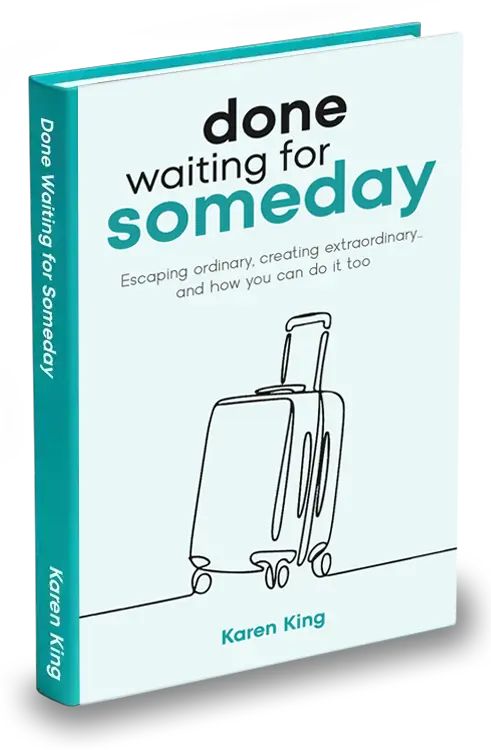
Done Waiting for Someday
The step-by-step path to turning the business you have into the freedom you want.
Get the book →Join The Escape Club
Support, accountability and a room full of people building freedom-first businesses alongside you.
Join the Club →