
Solopreneur Productivity Tools Won't Fix a Stuck Business
You have more solopreneur productivity tools than you have ever had. A project manager. A calendar app that colour-codes your life. Three note apps because the first two didn't stick. An AI assistant. A scheduler for your posts. And yet the money and the freedom you built this business for still haven't shown up, and most days you finish exhausted with the feeling you moved everything and moved nothing.
I know that feeling well. I ran a cake business to multiple six figures while working 70 to 80 hour weeks, and no app was going to save me from the thing that was actually broken. So let me be straight with you about what the tools are and aren't doing.
Are solopreneur productivity tools actually the problem?
Solopreneur productivity tools are apps and systems - task managers, schedulers, automations, AI assistants - meant to help a one-person business do more with less time. They are useful. But they only speed up whatever you're already doing. If the underlying work isn't the right work, better tools just help you go faster in the wrong direction.
That's the part nobody sells you. A tool cannot decide what matters. It cannot tell you that the offer you're polishing won't sell, or that the audience you're building doesn't buy. It will happily help you spend six hours a week on something that was never going to pay you.
So before we talk about which tools, we have to talk about what you're pointing them at. Because I have watched a lot of smart women drown in beautifully organised busywork.

Why more tools keep making you feel busier, not freer
Here's the trap. When the money isn't coming, "get more organised" feels like the responsible move. So you research a new system. You set it up. You migrate everything across. For about a week you feel on top of it.
Then real life hits, the system falls behind, and you feel worse than before - now you're behind AND you've got a graveyard of half-set-up apps. I'm the ADHD founder who tried every one of them, so I'm not judging. I did the right things in the wrong order for years.
The reason it keeps happening is that tool-shopping feels like progress without the risk of the real work. Setting up Notion is safe. Sending the offer, raising your price, telling people what you actually do - that's exposed. Your brain will pick the safe task every single time and call it productivity.
There's a real cost to this, and it's not just time. Every abandoned system is one more piece of evidence your brain files under "I can't finish anything," and that story is wrecking your confidence. If that's landing, my piece on why your unfinished projects are costing you more than you think goes deeper on that exact loop.
The one question to ask before you install anything
Before any solopreneur productivity tools go anywhere near your business, ask one question: what is the single activity that, done consistently, would actually bring in money?
For most solo businesses it's a short list. Making offers. Talking to potential buyers. Producing the thing people pay for. Showing up where those people already are. That's often it.
Everything else - the branding tweaks, the tenth funnel diagram, the perfect tagging system - is support work at best and hiding at worst. When you know your money-making activity, tools finally have a job: protect that activity and remove friction from it. Not add tasks. Remove them.
This is really a focus problem wearing a productivity costume. I wrote a whole piece on how to pick one thing when you're stuck doing everything, and it's the conversation to have before you touch another app.
What is the best productivity setup for a solopreneur?
The best productivity setup for a solopreneur is the smallest one you'll actually keep using. Not the most feature-rich - the most likely to survive a bad week. I'd rather you run a boring system for a year than a brilliant one for nine days.
Here's the stack I'd defend for someone who's stuck and needs to earn, not admire dashboards:
- One task list, one calendar. That's it for planning. If a task doesn't move the money-making activity forward this week, it goes on a someday list you look at monthly, not your daily view.
- Time-blocking for the scary work. Put the money activity in first, at your sharpest hour, before email exists. Everything else fills the gaps around it.
- One place for your ideas. A single note app or even a notebook. The point isn't the app, it's that your brain trusts it enough to let the idea go.
- One or two automations, maximum. Automate the genuinely repetitive admin - invoicing, appointment booking, a payment link. Don't automate things you do once a month.
Notice what's not on there. No fourteen-tool integration. The research backs the instinct: a study reported by Harvard Business Review found employees toggle between apps and websites nearly 1,200 times a day, and all that switching adds up to weeks of lost time a year (Harvard Business Review). Every app you add is another thing to toggle to. Fewer tools, used properly, beats a bigger stack every time.

How ADHD and overwhelm change the tool question
I was diagnosed with ADHD in 2023, and it explained about twenty years of my business life in one afternoon. I run on novelty and suffocate in routine, which is exactly why every shiny new tool felt like relief - and exactly why none of them lasted.
If your brain works like mine, the standard productivity advice is working against you. "Just build the habit" is not neutral advice for a brain wired for newness. You need systems that survive your interest running out, not ones that depend on it staying.
That means fewer decisions, not more. Default settings over customisation. Visible over hidden - if I can't see it, it doesn't exist. And ruthless honesty about the difference between "this is fun to set up" and "this makes me money." The first one is a trap for people like us.
The freedom I have now - 60-plus countries, world-schooling my kids, living out of carry-on - didn't come from a better app. It came once I finally focused on the two or three things that actually paid and let everything else go. The tools followed the focus. Never the other way around.
What to do this week instead of downloading anything
Don't add a tool this week. Subtract one. Open your business and find the app you set up with big plans and haven't opened in a month. Either commit to it or close the account. Half-used systems are draining you even when you're not looking at them.
Then write down your one money-making activity on something you'll see every day. Book it into tomorrow morning, first thing, before anything else gets a vote. Protect that block like it's a paying client, because it's the thing that becomes one.
If you do that for a fortnight and still feel stuck, the problem was never your tools - it's likely the offer, the price, or who you're aimed at. That's a different fix, and a good one, because it's the fix that actually moves your income. My piece on why the laptop lifestyle isn't the problem, your stuck business is walks through where that stuckness usually really lives.
Frequently Asked Questions
What are the most essential productivity tools for a solopreneur?
One task list, one calendar, one place for ideas, and one or two automations for repetitive admin like invoicing or bookings. Anything beyond that usually adds toggling and decisions without adding income.
Why do I feel more overwhelmed the more productivity tools I use?
Because every tool is another thing to check, update and switch between. App-switching alone costs the average worker weeks a year, and for a solo business it also becomes a way to feel busy while avoiding the exposed, money-making work.
Do productivity tools actually make you more money?
Only indirectly. Tools speed up whatever you're already doing, so they help if you're already pointed at income-producing work and hurt if they're helping you do busywork faster. The offer and the audience make the money, not the app.
What's the best productivity setup if I have ADHD?
The smallest system you'll actually keep using, with fewer decisions, default settings over customisation, and everything visible rather than hidden. Build systems that survive your interest running out instead of ones that depend on it staying.
If you're honest that you've been reorganising instead of earning, that's not a failure - it's a clue, and a fixable one. Start with The Reality Check to pinpoint exactly where your business is actually stuck, so the next thing you build points your energy at the work that pays. The freedom is on the other side of focus, not on the other side of one more app - and you are closer to it than the mess of half-used tools makes it feel.
Karen King, Founder of The Escapepreneur® & ESC Hub
Karen King is the founder of The Escapepreneur® and the woman behind the term. After burning out running a six-figure cake business in Australia, she sold everything, left the country, and spent the last 10 years building a freedom-based business across 60+ countries. On No More Somedays, she writes for the online business owner who is smart, tired, and done with waiting for someday to arrive. Honest, practical, zero hype.
Take the Reality Check
Working hard but going nowhere? Answer 10 quick questions and find out what's really been holding you back — and where to start.
Start My Reality Check →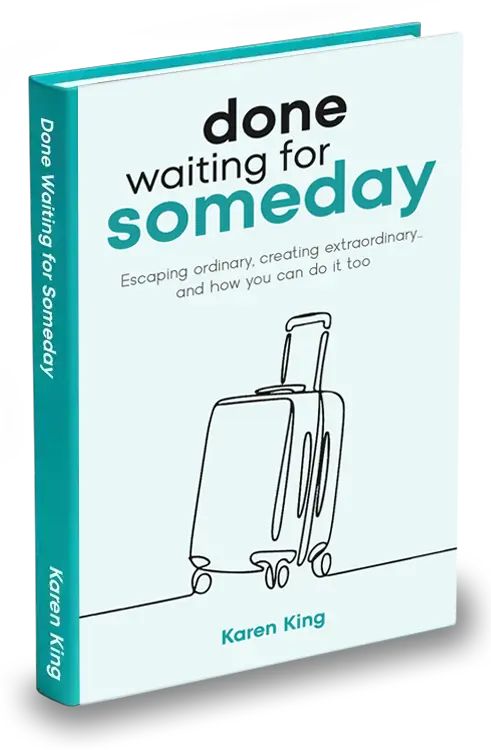
Done Waiting for Someday
The step-by-step path to turning the business you have into the freedom you want.
Get the book →Join The Escape Club
Support, accountability and a room full of people building freedom-first businesses alongside you.
Join the Club →