
The Best Books for Female Entrepreneurs Who Are Already In (And Stuck)
You've read the ones everyone tells you to read. You've highlighted half of Atomic Habits, nodded along to You Are a Badass, and maybe even underlined a whole chapter of Rich Dad Poor Dad years ago. And the business you actually run is still not paying you what you wanted, or giving you back the time you built it for.
So when you go looking for the best books for female entrepreneurs, most lists hand you the same starter pack aimed at someone who hasn't begun yet. You're not that person. You need reads that meet you where the wheels are actually spinning: the money isn't there, the freedom isn't there, and you can't quite name why.
The best books for female entrepreneurs who are already in business and stuck are the ones that force a decision - what to cut, what to focus on, what to stop rescuing - not the ones that re-sell you on the idea of working for yourself. Below are the ones I actually reach for, and why they earn the shelf space.
Why most "best books for female entrepreneurs" lists fail you now
Here's the thing about those lists. They're written for the woman deciding whether to start. Every recommendation is designed to get her over the line and into the game.
You're already in the game. You don't need permission or motivation to begin. You need a diagnosis. A book that tells you "believe in yourself and just start" is answering a question you settled a long time ago.
I spent years reading the wrong books for my stage. I built Cakes by Karen into something with around 50,000 followers and multiple six figures, and it still turned into a prison - 70 to 80 hour weeks, almost working for free while copycats undercut me. No motivational business book was going to fix that, because the problem wasn't belief. The problem was a model that couldn't give me my life back.
The books that helped were the ones that made me subtract. Fewer offers, fewer customers, less of me being the whole machine. That's the filter I use now: does this book help me cut, or just cheer me on?

The book that made me sell everything
I have to start here because it changed the actual trajectory of my life. I read The 4-Hour Work Week by Tim Ferriss on a plane out of Bolivia, and one question in it took me apart: if money were no object, what would you do?
I could only write two words. Travel. Help people. I'd built a whole business and lost myself inside it, and that book was the first thing that named the trap out loud.
It's not a perfect book and parts of it have dated. But if you're stuck because your business only works when you're chained to it, the core idea still lands: design the outcome first, then build the model to fit - not the other way round. That reframe is what eventually got me to sort my life into Sell, Keep, Donate, Trash and leave Australia in 2016 deliberately homeless.
Read it not for the tactics but for the permission to question a business you assumed you had to keep running exactly as-is.
Books for when you're doing too much and earning too little
If you feel like the hardest-working underpaid person you know, this is your section. The stuck I hear about most isn't laziness. It's a woman running six things badly because she can't bear to drop five of them.
Essentialism by Greg McKeown
This is the book I wish someone had thrown at me during the cake years. McKeown's whole argument is that the discipline of getting less done - but the right less - beats a heroic amount of scattered effort.
For me it maps directly onto the ADHD tax I paid for years: brilliant at starting, terrible at finishing, always adding. If your dashboard is a graveyard of half-built offers, pair this read with a hard look at why your unfinished projects are costing you more than you think. The two together are uncomfortable in a useful way.
Company of One by Paul Jarvis
Every business book seems to assume the goal is bigger. More staff, more revenue, more everything. Jarvis asks the question almost nobody in your feed is asking: what if better, not bigger, is the point?
If you started your business to be free and it's turning into a job with worse hours, this book gives you language and permission to stay small on purpose. It pairs well with actually doing the work of picking one thing when you're stuck doing everything, because staying small only works if you're clear on the one thing that pays.
Books that help you refocus a business you already built
The stuck woman's real problem is rarely a missing skill. It's too many directions at once. These reads are about narrowing.
The One Thing by Gary Keller
Simple premise: what's the one thing you can do such that everything else gets easier or unnecessary? I resisted this book for ages because it sounded like a slogan. Then I applied the question and realised I was avoiding the one thing precisely because it was the scary, high-impact thing.
If you're several offers deep and none of them are cutting through, this is a fast, blunt read. It works even better once you've decided how to niche down when you're already years in without torching everything you've built.
Building a StoryBrand by Donald Miller
A lot of stuck businesses aren't broken. They're just invisible because the messaging is a fog. Miller's framework fixes the most common reason a good offer doesn't sell: you made yourself the hero instead of the customer.
If people say "that sounds amazing" and then don't buy, read this before you touch your prices or your funnel again. Clear beats clever nearly every time.

Mindset books that actually hold up when you're stuck
I'm careful with the mindset genre because a lot of it is a warm bath that changes nothing. But two hold up.
Playing Big by Tara Mohr
This one is squarely aimed at women, and not in a fluffy way. Mohr writes about the specific patterns - hiding, over-preparing, hedging, waiting to feel ready - that keep capable women playing smaller than they are.
I felt seen in an annoying way. I said yes to being an exchange student in Bolivia at 17 with four sentences of Spanish, and yes to dancing on a stage when I'm not a dancer, because it never occurred to me to wait until I was ready. Somewhere in the grind of running a business, that instinct went quiet. This book is about getting it back.
Mindset by Carol Dweck
The research one. Dweck's work on fixed versus growth mindset is cited everywhere for a reason. Research summarised by Harvard Business Review found that how you frame ability - as fixed or as something you build - measurably shapes how you respond to setbacks and challenges.
When your business has been flat for a while, it's easy to decide you're just not the kind of person who cracks this. That belief does more damage than any missing tactic. Read this as a corrective, not a pep talk.
How do you pick the right business book when you're already stuck?
Don't read the ones that flatter you. Read the one that names the thing you've been avoiding.
Here's the honest test I use now. Before buying, I ask: is this going to tell me to do more, or help me choose? If it's a "do more" book, I put it down. I already know how to do more - doing more is part of why I got stuck.
The other filter is stage. Books written for beginners assume the hardest part is starting. Yours is different. Your hardest part is admitting the version you built isn't working and having the nerve to change it while it's still running.
If you're not sure which of your problems is the real one, that confusion is itself information. It usually shows up as a drop in confidence after years in business, and no book fixes that until you name what actually went sideways.
Do you even need more books right now?
Maybe not. This is the part most reading lists won't tell you.
If you've read ten business books this year and changed nothing, the missing piece isn't an eleventh book. It's a decision, and usually a hard one about what to stop doing. Books are brilliant for reframing. They're useless as a substitute for the choice only you can make.
I know because I used consumption as procrastination for years. Reading felt like progress while my business stayed exactly the same. The freedom didn't come from another book. It came when I finally focused and cut everything that wasn't working.
So use these reads as a nudge toward a specific move, then close the book and make it.
Frequently Asked Questions
What are the best books for female entrepreneurs who are already in business but stuck?
The most useful are books that force focus and subtraction rather than motivation: Essentialism by Greg McKeown, The One Thing by Gary Keller, and Company of One by Paul Jarvis. They help you cut and choose instead of adding more.
Are business books actually worth reading if my business has stalled?
Only if you act on them. Books are excellent for reframing a problem, but if you've read several this year and changed nothing, your missing piece is a decision, not more reading.
Is The 4-Hour Work Week still worth reading?
Yes, if you read it for the core reframe rather than the tactics. Parts have dated, but its central idea - design the life outcome first, then build the business to fit - still holds up for anyone whose business only works when they're chained to it.
What's the difference between beginner and stuck-founder business books?
Beginner books assume the hard part is starting and focus on belief and getting going. Stuck-founder books assume you've started and focus on diagnosis, focus, messaging and cutting what isn't working.
The right books will point you at a decision, but they won't make it for you. If your business has been flat for however long you've been at this, the honest next step is figuring out exactly where it's stuck - and that's what The Reality Check is built to do. Read one of these, then go do the uncomfortable, freeing thing it points you toward. That's the only reading list that ever changed anything for me.

Karen King, Founder of The Escapepreneur® & ESC Hub
Karen King is the founder of The Escapepreneur® and the woman behind the term. After burning out running a six-figure cake business in Australia, she sold everything, left the country, and spent the last 10 years building a freedom-based business across 60+ countries. On No More Somedays, she writes for the online business owner who is smart, tired, and done with waiting for someday to arrive. Honest, practical, zero hype.
Take the Reality Check
Working hard but going nowhere? Answer 10 quick questions and find out what's really been holding you back — and where to start.
Start My Reality Check →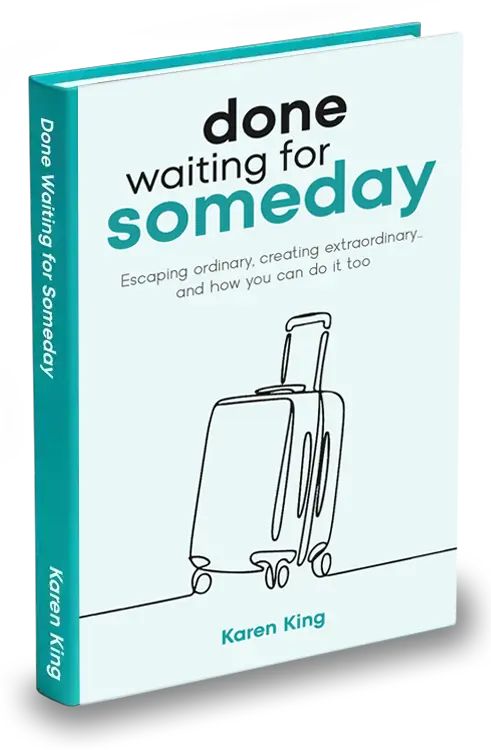
Done Waiting for Someday
The step-by-step path to turning the business you have into the freedom you want.
Get the book →Join The Escape Club
Support, accountability and a room full of people building freedom-first businesses alongside you.
Join the Club →