

Confidence in Business: Why Yours Dropped After Years In (And How to Get It Back)
You had more confidence in business when you knew less. Remember that? Back at the start, you didn't have the data to be scared. Now you're five, maybe ten years in, and every decision comes with a mental spreadsheet of everything that could go wrong. The irony is brutal: the more experience you gain, the more your nerve seems to shrink.
Confidence in business is not a personality trait you either have or don't. It is trust in your own judgement, built from evidence, and it erodes fastest when you stop getting clear feedback that what you're doing is working. That is exactly what happens when you've been at this a while and the money and freedom you wanted still haven't shown up.
I know that feeling well. I ran a cake business that grew to around 50,000 followers and multiple six figures, and I still ended up working 70 to 80 hour weeks, watching copycats undercut me until I was almost working for free. From the outside it looked like success. From the inside I had no idea if I was any good at anything anymore.
Why does confidence in business drop the longer you're in it?
When you start, everything is a first. First sale, first client, first month you cover your costs. Each one is a hit of proof, and proof is what confidence runs on.
A few years in, the firsts stop. The novelty wears off, the numbers plateau, and instead of "look what I built" you're stuck on "why isn't this bigger yet." You're not less capable. You've just gone a long stretch without the wins that used to top you up.
There's also comparison. You've been around long enough to watch people who started after you seem to overtake you. That is where the sense that you already know you want more but feel behind creeps in, and it is corrosive. Feeling behind in life is almost never about actual timelines. It's about measuring your messy middle against everyone else's highlight reel.
Here's the thing though. The confidence didn't leave because you got worse. It left because you stopped collecting evidence and started collecting doubts.

The confidence you had at the start was borrowed
Early confidence is often just not knowing enough to be afraid. Mine certainly was.
At 17 I went to Bolivia as an exchange student with about four sentences of Spanish. I said yes before I was ready, and I came home a year later fluent. At 21 I was the top home-security salesperson in Australia on $120k, not because I was slick but because it genuinely never occurred to me that anyone would say no.
That is beginner confidence. It's a gift, but it's borrowed against results you haven't earned yet. Real confidence in business is different. It's quieter, and it's built on actually knowing what works for you and what doesn't.
The problem is the transition between the two. There's a gap where the borrowed confidence has run out and the earned kind hasn't been built yet. That gap is where most people who are years in get stuck.
How do you rebuild confidence in business when you feel behind?
You rebuild it the same way you built it the first time: with evidence, in small pieces, fast. The mistake is waiting for one big win to fix everything. It won't. You need frequent, boring proof.
Start by shrinking the timeframe you judge yourself on. Feeling behind in life is a story about years and decades. Confidence gets rebuilt in weeks. Pick one thing you can move this week and finish it.
Then get honest about what's actually not working, because most stuck people don't have a confidence problem so much as a focus problem. When you're doing everything, nothing gets good enough to give you proof. Learning how to pick one thing when you're doing everything is often the fastest way to feel capable again.
A few things that genuinely rebuild it:
- Keep a "done" list, not just a to-do list. Write down what you actually finished each day. Momentum is evidence.
- Talk to your customers. Ask what changed for them because of you. Their answers are proof you can't argue with.
- Cut the thing you're worst at and dread most. Confidence rises when you stop white-knuckling work that isn't yours to do.
- Set targets you can actually hit, then hit them. A run of small kept promises to yourself does more than one heroic push.
Research backs the small-wins approach. Harvard's Teresa Amabile studied thousands of workday diaries and found that of all the things that lift people's inner work life, the single biggest driver of good days was making progress in meaningful work, even small progress. The progress principle is exactly why finishing one small thing beats waiting for the big win.
Entrepreneur loneliness is quietly killing your confidence
Nobody warns you how alone this gets. The people around you either don't run a business or don't run one like yours, so there's no one to sanity-check your decisions. Entrepreneur loneliness isn't just a nice-to-have social problem. It directly starves your confidence, because you have no mirror to reflect back whether your thinking is sound.
When you're isolated, every wobble feels like proof you're failing. In a room of people doing the same thing, that same wobble is just Tuesday. Context changes everything.
Entrepreneur loneliness is real and measurable. A widely cited survey found that 72% of entrepreneurs report mental health concerns, and isolation is one of the biggest drivers. You are not weak for feeling it. You're just alone, and that's fixable.
I learned this one the hard way. I built a 13,000-family online community, and Facebook deleted it overnight. Beyond the business hit, I lost my daily contact with people who understood the life I was building. It's why I never build only on rented land now, and why I take finding your actual people seriously instead of treating it as fluff.
Why "more experience" doesn't automatically mean more confidence
We assume competence and confidence rise together in a neat line. They don't. Often the more you learn, the more aware you become of everything you're not doing well, and that awareness reads as self-doubt.
I did the right things in the wrong order for years. I was ambitious and curious and tried everything, and the trying-everything is exactly what kept me broke for a long stretch. My freedom only showed up once I finally focused on one thing long enough for it to work.
So if you're experienced but shaky, don't read that as a sign you're not cut out for this. Read it as a sign you've been spreading yourself too thin to build real evidence anywhere. That's a positioning problem, not a you problem. Plenty of established coaches hit this exact wall, which is why figuring out why your business isn't paying you what it should yet usually comes down to focus and proof, not talent.

The evidence is already there - you're just not counting it
Here's a reframe that changed things for me. You have a mountain of evidence you're capable. You're just not looking at it because you're too busy staring at the gap between where you are and where you wanted to be.
I sold a whole life into four piles - sell, keep, donate, trash - and left Australia in January 2016 deliberately homeless. Since then it's been 60-plus countries, world-schooling the kids, and 80-plus house sits that have saved us over $250,000. My daughter Sienna ran a boutique hotel's front of house at 10.
None of that came from feeling confident first. It came from doing the scary thing, watching it work, and letting the proof accumulate. The confidence was the result, never the requirement.
You've almost certainly done harder things than whatever you're avoiding this week. Go count them. Then do one more.
What actually restores confidence in business for good
Short bursts of proof rebuild it. Keeping it takes structure. You need a way of working that generates wins regularly instead of leaving you dependent on the occasional big month.
That means a business simple enough to actually get good at, priced so success is visible in your bank account, and a handful of people who get what you do. When those three things are in place, confidence stops being a feeling you chase and becomes a byproduct of how you operate.
I called what I eventually built the antidote to my own brain. It's the thing that finally let a restless, novelty-hungry person stay put long enough to succeed. Confidence in business, for me, came from finally building something that fit how I actually work instead of how I thought I should.
Frequently Asked Questions
Why did I have more confidence in business when I first started?
Early confidence usually comes from not knowing enough to be afraid, plus a steady stream of firsts that each feel like a win. As those firsts dry up, the confidence that was borrowed against inexperience fades before the earned kind is built.
Is it normal to feel behind in life even when you've achieved a lot?
Yes. Feeling behind is almost always about comparing your day-to-day reality to other people's highlights, not about any real timeline. Shrinking the window you judge yourself on, from years to this week, usually settles it fast.
How does entrepreneur loneliness affect confidence?
Isolation removes the mirror that tells you whether your thinking is sound, so normal wobbles start to feel like proof of failure. Surrounded by people doing similar work, those same doubts read as ordinary, which is why community directly protects your confidence.
How long does it take to rebuild confidence in business?
Faster than most people expect, because it runs on evidence rather than time. A few weeks of small, finished wins and honest customer feedback will shift how capable you feel more than one big result ever will.
You don't need more courage. You need a run of small proof and a clearer picture of what's actually not working, and both are closer than they feel from where you're sitting. If you're years in and stuck, the most useful next step is an honest look at what's holding the business back, which is exactly what The Reality Check is built to give you. Start there, then go collect your next piece of evidence.
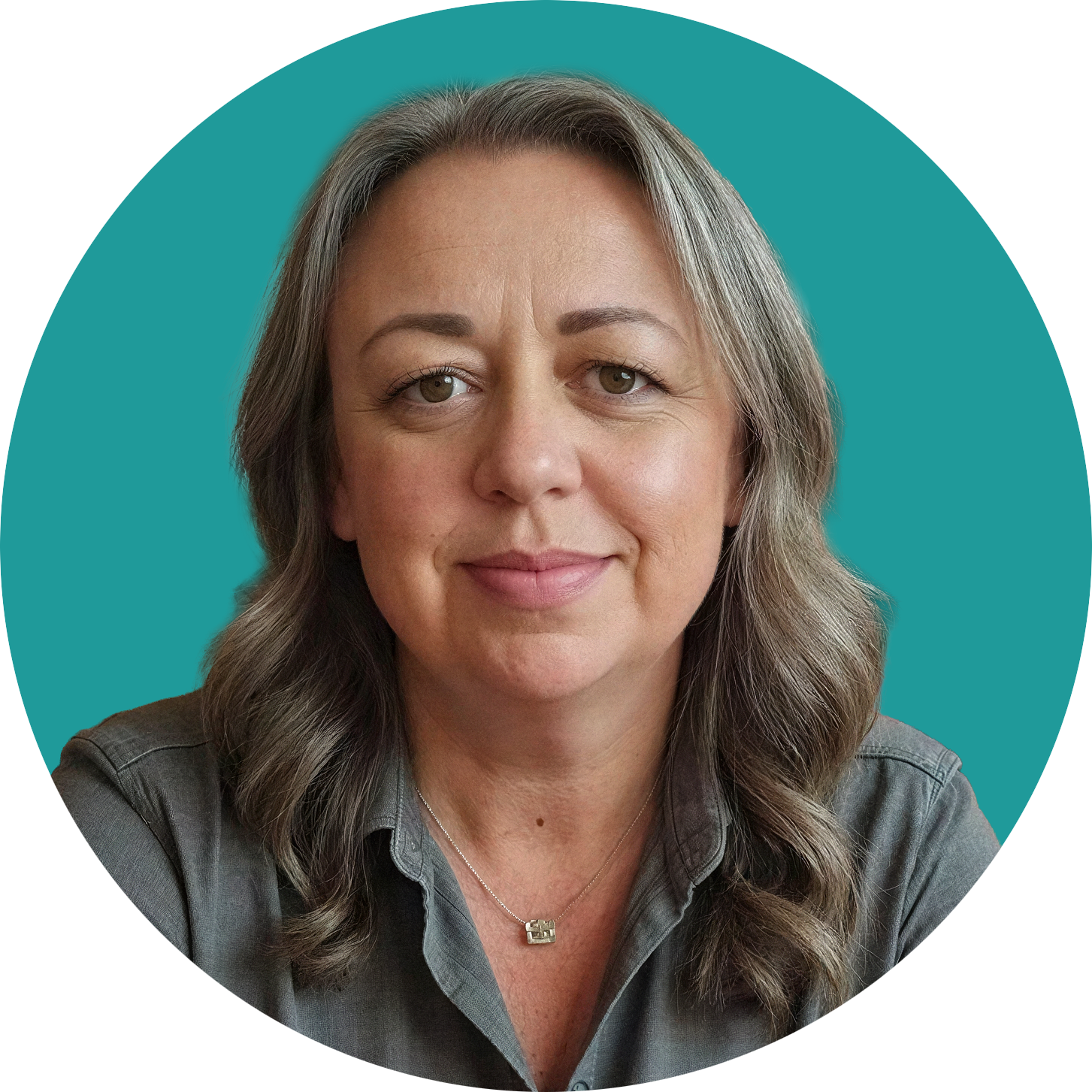
Karen King — Founder, The Escapepreneur™ & ESC Hub
Karen King is the founder of The Escapepreneur™ and the woman behind the term. After burning out running a six-figure cake business in Australia, she sold everything, left the country, and spent the last 10 years building a freedom-based business across 60+ countries. On No More Somedays, she writes for the online business owner who is smart, tired, and quietly done with waiting for someday to arrive. Honest, practical, zero hype.
Take the Reality Check
Working hard but going nowhere? Answer 10 quick questions and find out what's really been holding you back — and where to start.
Start My Reality Check →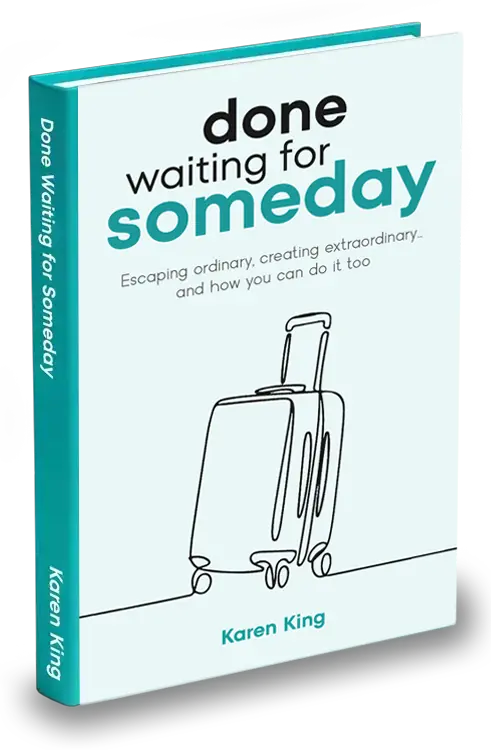
Done Waiting for Someday
The step-by-step path to turning the business you have into the freedom you want.
Get the book →Join The Escape Club
Support, accountability and a room full of people building freedom-first businesses alongside you.
Join the Club →