
Career Change at 40: How to Move When You Already Know You Want More
You have spent years building something real. Maybe that was a business. Or maybe it was a career inside someone else's company, climbing, delivering, being the reliable one. And yet here you are at 40, looking at the numbers and the calendar, feeling like you settled for a smaller version of the freedom you came for.
A career change at 40 is not about starting over. It is about correcting course - taking the skills, money sense and self-knowledge you already have, and pointing them at the life you actually want instead of the one you accidentally built. The hard part is not capability. It is admitting the current version is not it.
I know that feeling because I lived it. I had the work, I had the responsibility, and I was still tired, still earning less freedom than I wanted, still wondering when the part I came for was supposed to kick in. This post is for the woman who is past being sold on the dream and just wants to know what to actually do next.
Why a career change at 40 feels different from your twenties
In your twenties you had nothing to lose and no idea what you were doing. At 40 you have the opposite problem. You have momentum, commitments and a track record - and all of that makes change feel heavier than it really is.
The good news is you are not the underdog anymore. Whether you have been running a business or running a department, you know how to solve problems, manage money, deliver under pressure and read a room. Those are the exact skills most people spend a decade trying to learn. You already paid for that education.
What trips women up in midlife is the sunk-cost story. You think because you spent years building this thing - the role, the reputation, the steady paycheck - you owe it your future too. You do not. The work exists to serve your life, not the other way around.
And the data does not support the "too late" fear either. According to the U.S. Bureau of Labor Statistics, people hold an average of around 12 jobs across their working life, with plenty of movement well into their forties and fifties. Changing direction at this stage is not the exception. It is normal.

What is a career change at 40, really?
A career change at 40 is any deliberate shift in how you earn - new model, new audience, new offer or new industry - made when you already have experience behind you. For a woman at this stage, it usually means building something around the skills you already have rather than learning a whole new trade from zero.
That distinction matters. A lot of advice on this topic assumes you are 22 and choosing a path for the first time. You are not that person. You are further along, and your move is more surgical than dramatic.
So the question is not "what job should I get." It is "what part of what I do now is worth keeping, and what is quietly draining me." Most women already know the answer. They have just been too busy to say it out loud.
The three honest questions to start with
- What in my work do I dread on a Sunday night, and could I stop doing it?
- Where does my real value come from, and is it the work I want more of?
- If no one was watching, what would I build next?
Write your answers down. Not in your head - on paper. The gap between what you do now and what those answers reveal is your real next move, and it is usually smaller and closer than you feared.
How do you make a career change in midlife without blowing everything up?
You do not quit on Monday. A career change in midlife works best as a bridge, not a cliff. You keep the income that pays your bills while you build the thing that excites you, and you switch the weight slowly from one to the other.
I built my own freedom-based business this way, in layers, not in one heroic leap. Each layer earned before I leaned on it. That is far less romantic than the burn-it-down story, but it is the version that actually lets you sleep at night.
Start by protecting your runway. Know your real monthly number - the one that covers life, not the fantasy lean version. When you know exactly what you need, the next move stops feeling like a gamble and starts feeling like math.
Then run small tests. Offer a service to two people on the side. Sell the new idea to a tiny list. Watch what people actually pay for, not what they politely say they like. The market will tell you faster than any amount of overthinking.
If you are not sure what you are even building toward yet, get specific about the life first and the business second. I wrote about exactly how I did that in how I built my dream life from scratch, and the order matters more than people think. Design the life, then reverse-engineer the income that funds it.
Best career change at 40 ideas for women who want more freedom
When women ask me for ideas, they expect a list of new jobs. I usually hand them something better: ways to turn the experience they already have into something more profitable and more freeing.
Here are the moves I see work most often for women five to ten years into their working life:
- Productise your expertise. Stop trading hours for money. Package what you know into a fixed offer, a course or a membership so income stops being tied to a calendar.
- Sell to fewer people at higher value. Same skill, fewer clients, better prices. Most experienced women undervalue what they know and overwork to make up the difference.
- Niche down hard. Become the obvious choice for one specific person instead of a fine choice for everyone. Specialists earn more and chase less.
- Build a recurring revenue stream. Retainers, subscriptions, licensing - anything that pays you again next month without starting from zero.
- Teach what you know. The skills you take for granted are things others will gladly pay to learn.
Notice none of these require you to throw away a decade of experience. The best career change at 40 usually uses everything you already are, just arranged more intelligently. You are not starting from scratch. You are starting from experience.
If you want a clearer picture of the kind of business owner this points toward, I broke it down in what an Escapepreneur actually is - someone who builds the business around the freedom, not the other way around.

What about a career change after 50? Is the timing ever wrong?
I get this question from women a decade older too, and my answer does not change. A move after 50 follows the same rules as one at 40 - you simply have even more skill and self-knowledge to work with, and usually fewer years willing to be wasted on the wrong thing.
The only wrong timing is the timing where you keep waiting for permission. There is no perfect season. The kids will never be the right age, the market will never be calm, and you will never feel completely ready. Ready is something you build by moving, not something you wait to receive.
What actually stops women is rarely age. It is the quiet belief that this much discomfort means they are doing something wrong. They are not. Discomfort at 40 or 50 usually means you have outgrown the thing you built, which is a good problem, not a warning sign.
How to get unstuck when you cannot see the next step
Stuck is not a lack of options. It is usually too many options and no decision. When everything feels possible, the brain freezes, and freezing feels like confusion. It is not. It is avoidance wearing a smart outfit.
The fix is to shrink the question. Instead of "what should I do with the rest of my career," ask "what is the one experiment I could run in the next 30 days." Small, time-boxed, low-stakes. You learn more from one real test than from a year of planning.
I also push every woman I work with to get the future out of her head and somewhere she can see it. That sounds soft, but the clearer the target, the faster the decisions. I am genuinely a fan of getting visual about it, which is why I wrote about building a vision board that actually works instead of being a Pinterest exercise that goes nowhere.
Then protect your decisions from other people's fear. The friends and family who love you will often advise you to play it safe, because they are imagining the risk without seeing the upside you can see. Listen politely. Then back yourself.
The mindset shift that makes a midlife career change stick
The women who make a successful career change in their 40s share one trait. They stop treating their current work as their identity and start treating it as a draft. Drafts can be edited. Identities feel permanent, and permanent things are terrifying to change.
You built one version. It taught you things. Now you build a better version with what it taught you. That is not failure. That is exactly how good careers are supposed to evolve.
And here is the thing I wish someone had told me sooner: the freedom you came for is still available. You did not miss it. You just built the first version too small, and 40 is a fine age to build the bigger one.
Frequently Asked Questions
Is 40 too old for a career change?
No. At 40 you have skills, money sense and self-knowledge that younger people are still building, which usually makes a career change faster and less risky, not harder. Average career data shows people change direction well into their forties and fifties as a matter of course.
What is the best career change at 40 for someone who wants more freedom?
The best move is usually building something around the experience you already have rather than starting fresh - productising your expertise, selling at higher value, niching down or adding recurring revenue. These use your existing skills and tend to add both income and freedom at once.
How do I make a career change in midlife without losing income?
Treat it as a bridge, not a cliff. Keep your current income while you test the new direction with a few people on the side, then shift the weight gradually as the new work proves itself. Know your real monthly number first so the move is based on math, not fear.
What if I do not know what I want to change into yet?
Design the life first, then choose the income that funds it. Shrink the question to one 30-day experiment instead of trying to plan your whole future, and pay attention to what people actually pay for rather than what they say they like.
You already did the hard part once. You proved you can build something real and stick with it, and that capability does not expire at 40. The next version just needs a plan you can see and a first step small enough to take this week.
If you want that plan laid out simply

Karen King — Founder, The Escapepreneur™ & ESC Hub
Karen King is the founder of The Escapepreneur™ and the woman behind the term. After burning out running a six-figure cake business in Australia, she sold everything, left the country, and spent the last 10 years building a freedom-based business across 60+ countries. On No More Somedays, she writes for the online business owner who is smart, tired, and quietly done with waiting for someday to arrive. Honest, practical, zero hype.
Take the Reality Check
Working hard but going nowhere? Answer 10 quick questions and find out what's really been holding you back — and where to start.
Start My Reality Check →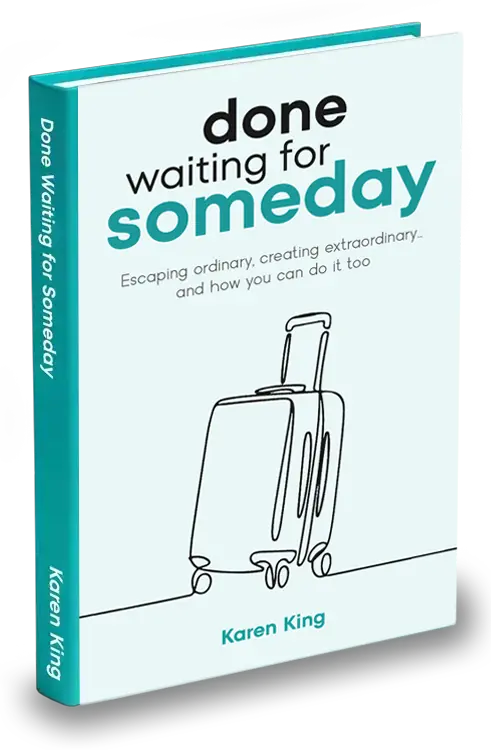
Done Waiting for Someday
The step-by-step path to turning the business you have into the freedom you want.
Get the book →Join The Escape Club
Support, accountability and a room full of people building freedom-first businesses alongside you.
Join the Club →