
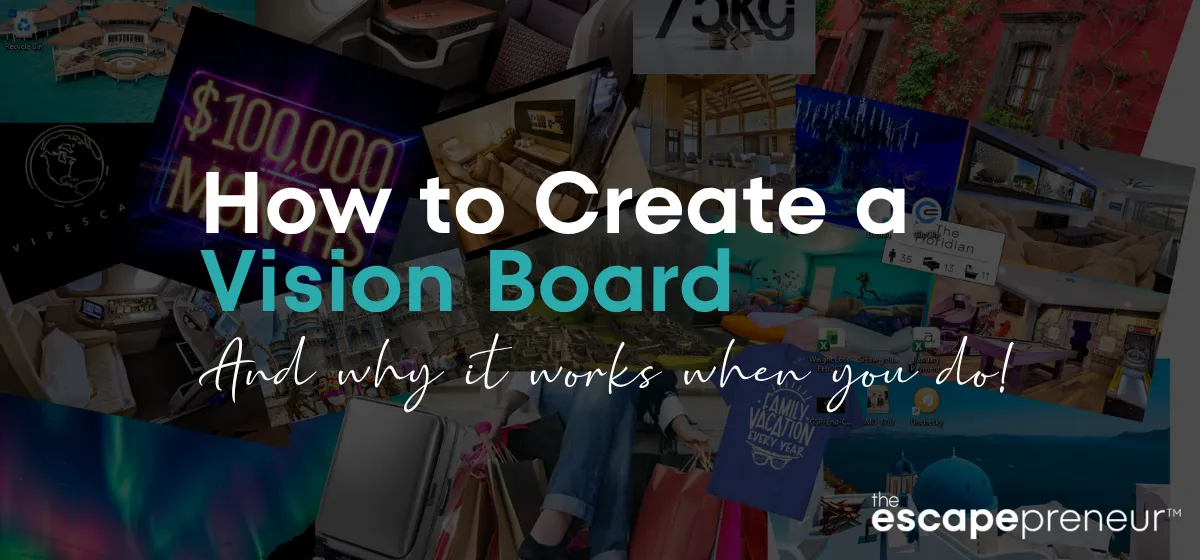
How to Create a Vision Board (And Why It Works When You Do It Right)
I want to tell you about the moment I realised I had already been somewhere on my vision board.
I made my vision board in 2022. One of the images on it was a photo of hundreds of hot air balloons drifting above a dramatic landscape at sunrise. I had no idea where it was. I just loved the image - it felt like freedom.
Within six months, we were in Cappadocia. Six nights in a beautiful cave hotel, and every single morning I got up early to watch the balloons rise above the fairy chimneys as the sun came up. It was one of the most magical things I have ever seen. (And side note - the best steak I have ever eaten in my life was at a little restaurant there. Completely unrelated, but it had to be said.)
I didn't make the connection while I was there. It wasn't until a week after we'd left that I opened my laptop, looked at my vision board, and stopped.
That was the place. That exact landscape. Those exact balloons.
I hadn't planned Cappadocia specifically. I hadn't researched it or put it on an itinerary. It had just happened. And somewhere in the background, without me consciously directing it, my brain had been orienting toward it for six months.
That's what a vision board does when you do it right.
It's not a craft project. It's not wishful thinking. It's a clarity tool - and for anyone building a business around the life they actually want, it might be one of the most underrated things you can do.
Why Most Vision Boards End Up in a Drawer
Most people create a vision board in January, feel great about it for a few days, and then never look at it again.
That's not a vision board problem. That's a placement problem - and a clarity problem.
If your vision board is sitting in a cupboard, it is doing absolutely nothing. And if it's filled with vague aspirational images that don't connect to the life you're building - beautiful as they might be - it's decoration, not direction.
A vision board that works has to do two things. It has to be built on genuine clarity about what you want. And it has to live somewhere you actually see it, every single day.
Get those two things right and it stops being a Pinterest project. It becomes a compass.
Start Here - Get Clear Before You Search for a Single Image
This is the step most people skip. They go straight to Google Images or start flicking through magazines before they've spent ten minutes thinking about what they actually want.
If you're not sure where to start, here's what my dream life actually looks like - it might help spark some ideas
Before you create a vision board, sit down with a blank page and answer these questions honestly:
What does your perfect day look like - in specific, not vague terms?
What do you want to earn, and by when?
Where do you want to be living or working?
What does freedom mean to you, practically?
What are you done tolerating?
Write the answers down. Your vision board should be a visual translation of those answers - not a collection of images that look nice together. This kind of clarity is the foundation of everything - it's the difference between drifting and becoming what an Escapepreneur™ actually is.
When I left Australia in 2015 and we became full-time travellers, I did this on a flight from Bolivia to Peru. I had a copy of The 4-Hour Workweek on my tray table and I wrote down two words: "travel + help people." That became the foundation. Everything I built from that point came back to those two things.
Your version doesn't have to happen on a flight. But it does have to happen before you touch any images.
How to Create a Vision Board Step by Step
Step 1 - Choose your format
Physical or digital - both work. Choose the one that fits your life.
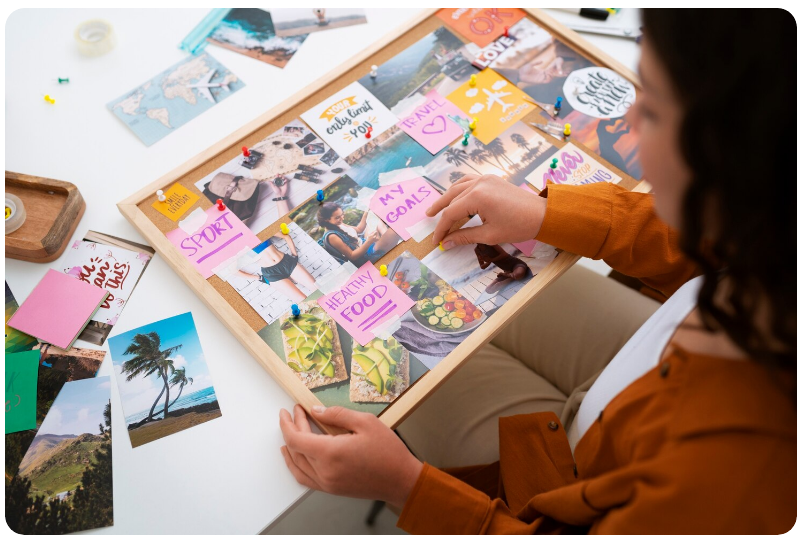
A physical board - cork board, poster board, cut-out images and printed photos - is tactile and satisfying to make. It works well displayed somewhere prominent in your home or office.
A digital board is easier to update, harder to lose, and more practical if you spend most of your day at a screen. Canva is brilliant for this - you can build something clean and beautiful in under an hour.
There's no better option. The board you actually look at beats the board that's technically superior.
Step 2 - Organise by category
Don't put everything on one cluttered board with no structure. Organise your vision board by the areas of your life that matter most to you. This gives it clarity and makes it easier to look at.
Suggested categories:
•Business and income - what you're building, what you want to earn
•Lifestyle and location - where you work, how your days feel day-to-day
•Travel and experiences - the places, adventures, and moments you're working toward
•Health and energy - what you need to sustain everything else
•Relationships and community - who you want around you
Each section should have at least one image and one word or short phrase that captures exactly what you want.
Step 3 - Choose images that represent the feeling, not just the goal
This is the part that separates a vision board that actually moves you from one that just sits there looking nice.
Don't just find a picture of a beach. Find a picture that makes you feel the way you want to feel when you've built the business and life that gives you that freedom.
The image isn't the goal. The image is the feeling you're working toward.
When I look at my vision board and feel nothing, I know something's wrong - either the image isn't right, or I've lost touch with what I actually want. When I look at it and feel pulled toward something, that's when it's working.
Step 4 - Add your numbers
This is the step most vision boards miss entirely.
Write your income goal on it. Not "financial freedom" - a specific number. If you want to earn $10,000 a month, write $10,000 a month. Put it somewhere you can see it clearly.
Specificity matters. Vague goals produce vague results.
Step 5 - Add words and phrases alongside your images
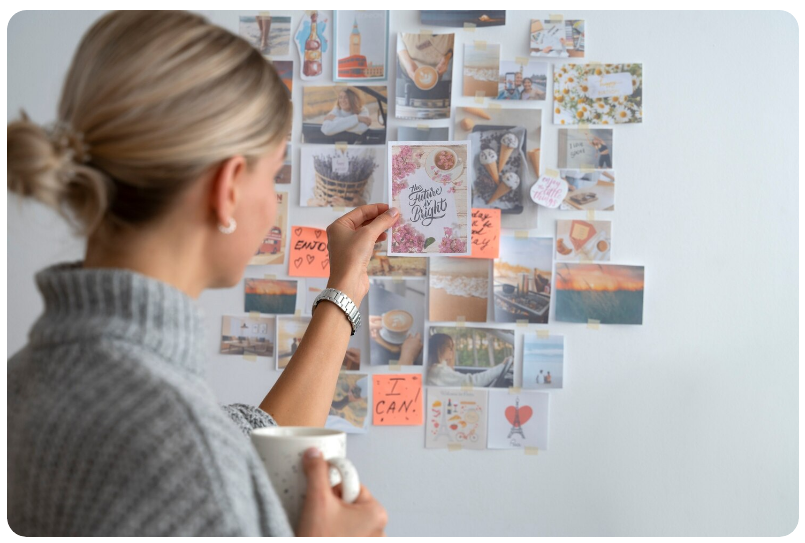
Images get you feeling. Words get you thinking. Use both.
Pull out short phrases that mean something to you. A line that captures what you're building. A quote that stops you in your tracks. Words that describe the version of yourself you're working toward.
Keep it tight - five or six well-chosen words will do more than twenty that don't mean much.
Where You Place It Changes Everything
This is where most people get it wrong.
A vision board that lives in a folder on your desktop or propped behind a door is useless. You have to see it. Every day. Without making any effort to look.
Here's what works:
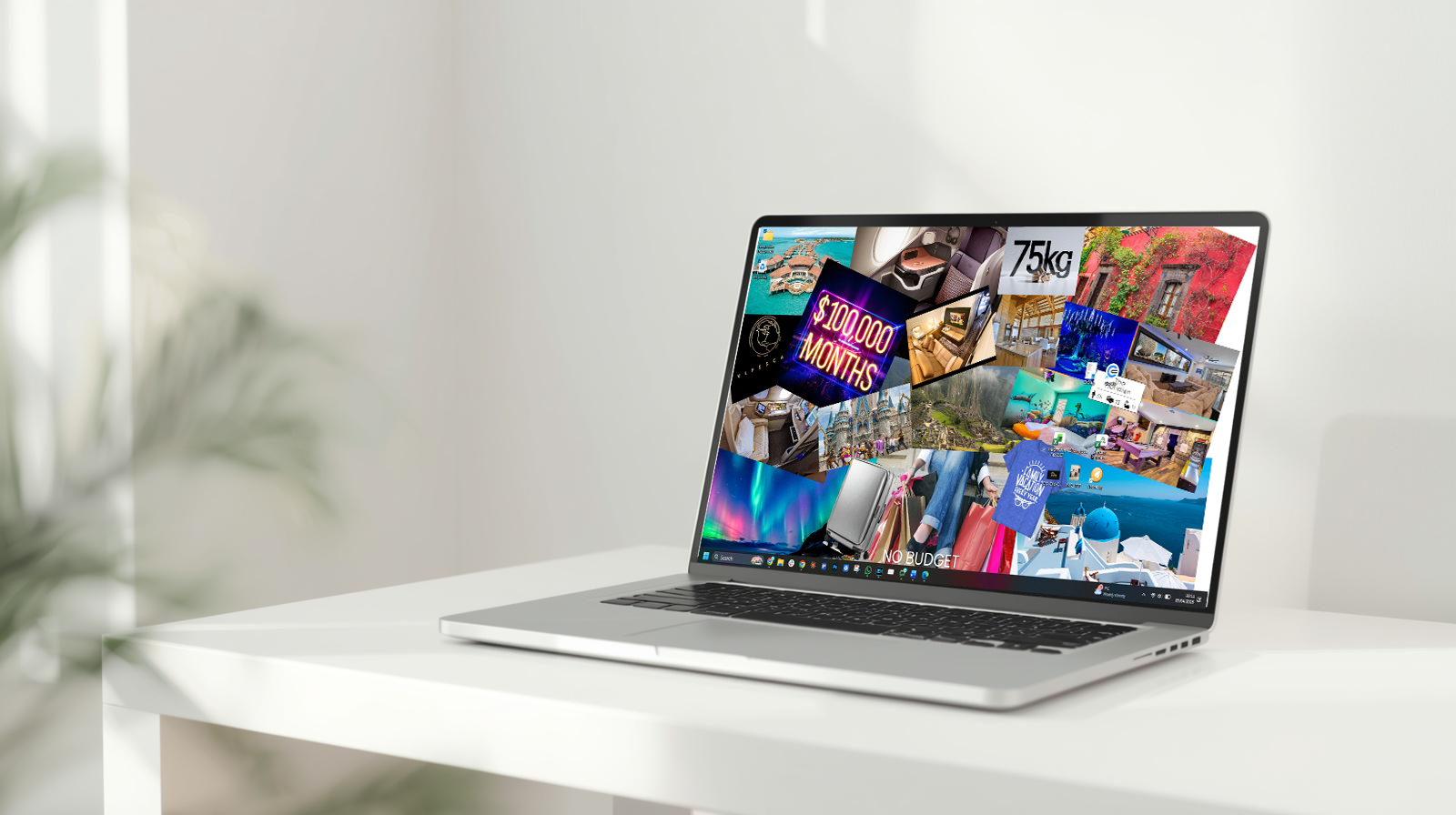
Set it as your laptop homescreen.
Every time you open your computer, there it is. No effort required - it's just there, in your peripheral vision, reminding you what you're building. This is exactly what I had done with that Cappadocia image. I hadn't gone looking for it. It was just there, every single day, quietly doing its job.
Set it as your phone wallpaper.
You check your phone dozens of times a day. Make every one of those moments do something for you.
Print it large and stick it on the wall.
Not a little A4 printout tucked in a corner - a proper large print, somewhere you spend time. Your office wall. Above your desk. The wall opposite your bed. Somewhere your eyes naturally land.
The goal is zero friction. You shouldn't have to remember to look at it. It should just be there, part of your environment, working quietly in the background.
How Often to Properly Review It
Looking at it daily keeps it in your subconscious. But a proper review is different - and it matters.
Once a month, sit down with your vision board and ask: what has moved forward? What's stalled? Is everything on here still what I actually want?
Goals change. Life changes. A vision board built for who you were eighteen months ago might not reflect who you're becoming now. That's fine - update it.
An outdated vision board is worse than no vision board, because it tells your brain the wrong story.
When to Rebuild It Completely
Rebuild fully at least once a year. Use it as a proper reflection practice - look back at what you set out to create, take stock of what's changed, and build the next version from a place of clarity rather than habit.
Some of the most valuable time you'll spend on your business isn't in your inbox or your to-do list. It's in getting clear on where you're actually going.
Your Vision Board Is the Picture - The Freedom Blueprint Is the Plan
A vision board gives you the destination. It doesn't give you the route.
Once you're clear on what you're building toward, the next step is mapping out how to actually get there - who you serve, what you offer, and the systems that will support you to build it.
That's exactly what The Freedom Blueprint walks you through. It's free, it's practical, and it's built for women who already know they want more and are ready to figure out exactly how to get there.
Download The Freedom Blueprint at escapepreneur.com/freedom-blueprint and start turning your vision into a real plan.
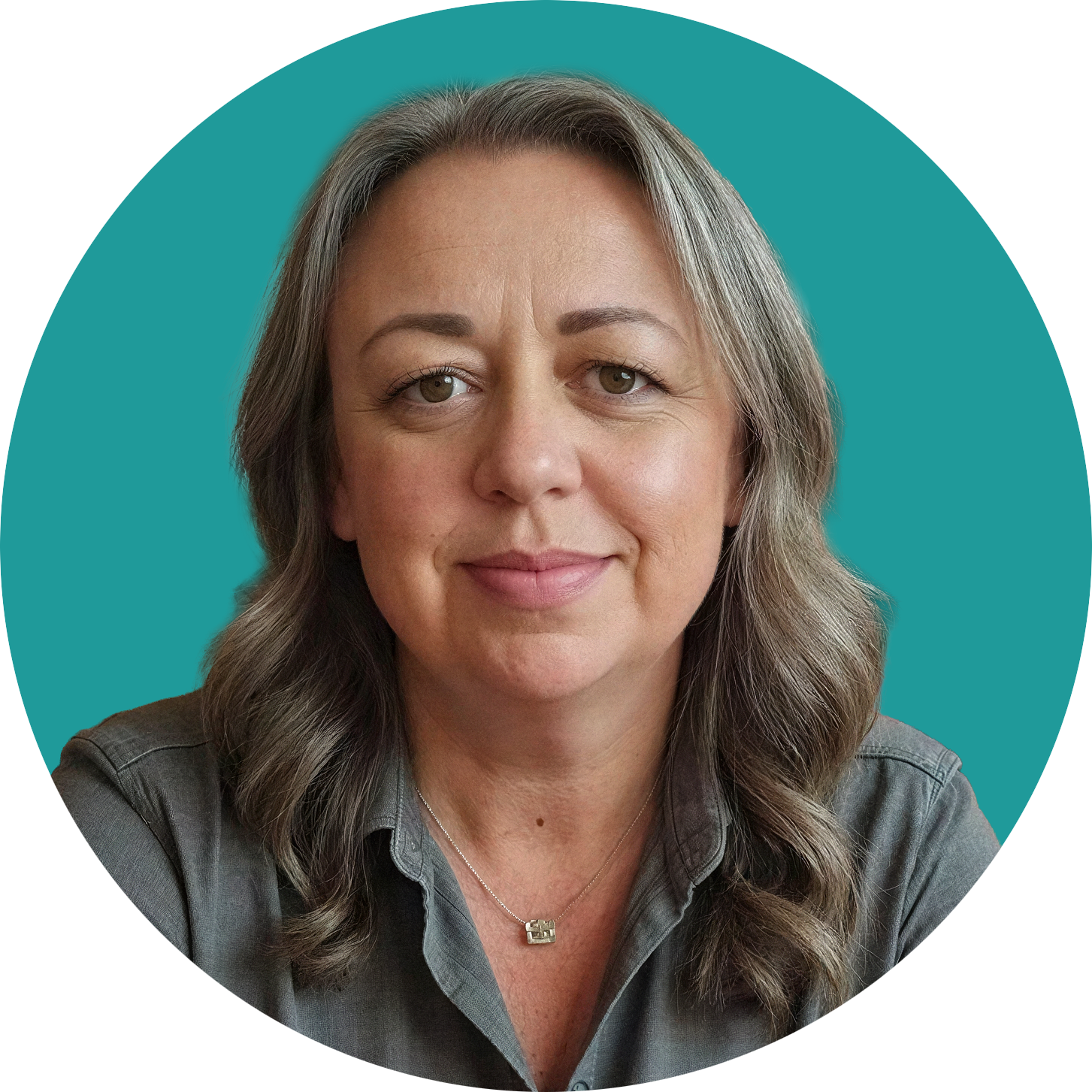
Karen King — Founder, The Escapepreneur™ & ESC Hub
Karen King is the founder of The Escapepreneur™ and the woman behind the term. After burning out running a six-figure cake business in Australia, she sold everything, left the country, and spent the last 10 years building a freedom-based business across 60+ countries. On No More Somedays, she writes for the online business owner who is smart, tired, and quietly done with waiting for someday to arrive. Honest, practical, zero hype.
Take the Reality Check
Working hard but going nowhere? Answer 10 quick questions and find out what's really been holding you back — and where to start.
Start My Reality Check →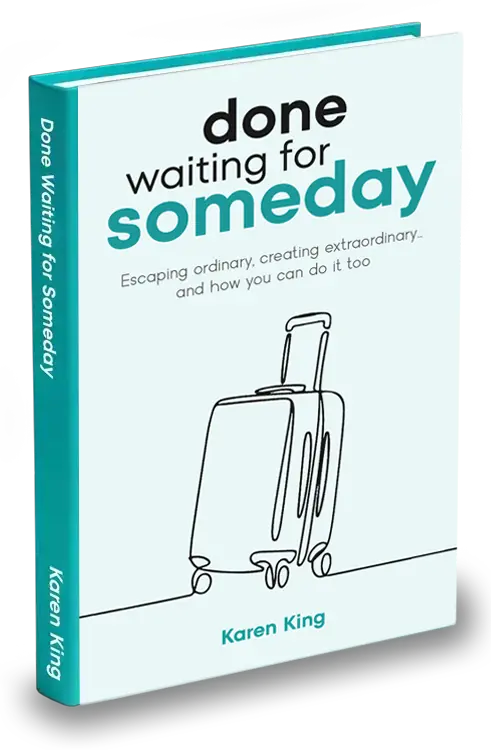
Done Waiting for Someday
The step-by-step path to turning the business you have into the freedom you want.
Get the book →Join The Escape Club
Support, accountability and a room full of people building freedom-first businesses alongside you.
Join the Club →