
The Biggest Money Mistakes Women Make in Business (And How to Stop Making Them)
You built the business. You work hard. You show up every single day. And the money still isn't there, or it's there in bursts that never quite add up to the freedom you were promised. That's the gap I want to talk about, because the biggest money mistakes women make in business are rarely the ones you'd expect, and they're almost never about working harder.
I ran a cake business that hit multiple six figures and still had me working 70 to 80 hour weeks, nearly for free, while copycats undercut me. I was busy. I was good at what I did. And I was broke in every way that mattered. So I'm not writing this from a textbook. I'm writing it from the inside of the exact trap you might be sitting in right now.
What are the biggest money mistakes women make in business?
The biggest money mistakes women make in business are undercharging out of fear, confusing being busy with being profitable, building on rented land, and pouring money into tools and courses instead of fixing the offer that isn't selling. None of these feel like money mistakes in the moment. They feel like being responsible, humble, or thorough.
That's exactly why they're so expensive. A mistake you can see, you fix. These ones hide behind effort, so you keep working and keep wondering why the bank balance doesn't move.
Let me take them one at a time, because the fix for each is different.

Undercharging because you're afraid of the "no"
This is the one I see most, and the one that cost me the most. I priced my cakes to be "fair." Someone would ask the price, I'd flinch before I'd even said the number, and I'd knock it down in my head before it left my mouth.
Here's what's strange. At 21 I was the top home-security salesperson in Australia on $120k a year, and I did it without a single sleazy tactic. It never occurred to me that anyone would say no, because I genuinely believed I was helping them solve a problem.
Somewhere along the way, in my own business, I lost that. I started treating my price like an apology instead of the cost of a problem solved. Women do this more than men, and the research backs it up. Analysis of the US gender pay gap has repeatedly shown women are less likely to negotiate and more likely to accept the first number offered (Pew Research Center).
The fix isn't a pricing formula. It's a decision. Charge for the result you deliver, not the hours you put in or the discomfort you feel saying the number. If you're carrying this one, read the honest take on building a business that finally pays you what you're worth before you send your next quote.
Confusing being busy with being profitable
This one is sneaky because it looks like success. Your calendar is full. Your inbox is heaving. You fall into bed exhausted and feel like you must be getting somewhere, because surely all that work turns into money.
It doesn't automatically. I was flat out every waking hour with the cakes and still almost working for free. Busy is a feeling. Profitable is a number. They are not the same thing, and the day I understood that was the day things started to change.
The question that cuts through it is simple. Of everything you did this week, how much of it actually produced income, and how much of it just felt like work? Most stuck businesses are drowning in the second kind. I wrote a whole piece on the difference between being busy and being profitable because it's the hinge the whole thing turns on.
Start tracking it. Not your to-do list - your money list. What you'll usually find is that a tiny slice of your effort makes almost all of your income, and the rest is noise you've convinced yourself is essential.
Spending money to feel productive instead of fixing what's broken
When sales are slow, there's a very human urge to do something. And "something" often means buying. A new course. Another tool. A prettier logo. A funnel. A scheduler. A planner that promises this time will be different.
I get it. Buying feels like progress and it's a lot less confronting than admitting the offer itself isn't landing. But throwing money at tools rarely moves a business that's stuck on something deeper. The tools aren't the problem.
If your offer isn't selling, a better calendar app won't save it. I've said before that productivity tools won't fix a stuck business, and the same is true of courses you buy to avoid the harder question underneath.
Before you buy the next thing, ask what problem it actually solves and whether that's the problem keeping your income flat. Usually it isn't. Usually the real issue is the offer, the price, or who you're speaking to - and none of those have a shopping-cart button.
Building everything on rented land
This one I learned the brutal way. I had an online community of 13,000 families that Facebook deleted overnight. Gone. No warning, no appeal that went anywhere, years of work vanished because I'd built my house on someone else's dirt.
Plenty of women build their entire income on a single platform, a single algorithm, or a single client. It feels free because it's cheap to start. It isn't free. You're one policy change or one lost account away from zero, and that is a money mistake even when it's making money right now.
Own something. An email list. A paid offer that doesn't depend on being seen by an algorithm that day. A client base that isn't one customer wearing five hats. Diversify where the money can actually come from, which is exactly why I'm so careful about income streams that hold up when you're already in business rather than the ones that collapse the moment you stop pushing.

Running your money by feel instead of by numbers
You can't fix what you refuse to look at. A lot of women who feel stuck on money have never actually sat down with the real figures, because the figures feel scary and vague and easier to avoid.
I understand that avoidance. For years I struggled financially, partly because my ADHD brain wanted the next shiny thing and never the boring admin. But money that lives only in a feeling will keep surprising you, and never in a good way.
You don't need to become an accountant. You need to know three numbers off the top of your head: what comes in, what goes out, and what's left. Separating business money from personal money is the first clean step, and a proper business bank account setup makes the rest of it stop feeling like fog.
Why these mistakes hit women harder
I don't think women are worse at business. I think we're trained, from very early, to be agreeable, to not want too much, to be grateful for what we're given and not make a fuss about the price. That training doesn't switch off when you register a business name.
It shows up as the flinch before the price, the discount nobody asked for, the free extra you throw in to be nice. Each one is small. Stacked over however long you've been at this, they're the difference between a business that funds your life and one that drains it.
The good news is that none of this is a talent problem. Pricing is a decision. Profit is a number you can track. Ownership is a choice about where you build. These are all fixable, and most of them are fixable faster than you'd think once you stop treating effort as the answer.
How do you stop making these money mistakes?
Start by naming which one is actually yours. You probably recognised at least one of these more than the others, maybe with a slight wince. That wince is the information. That's where your money is leaking.
Then stop adding and start removing. Most stuck founders don't need to do more things. They need to do fewer things that actually make money, and charge properly for them. I went from almost working for free to a location-independent life across more than 60 countries not by hustling harder, but by finally focusing on the few things that paid and cutting the rest.
And if you're exhausted on top of it all, read why you're running on empty and what actually fixes it, because an empty founder makes expensive decisions. You can't price with confidence when you're running on fumes.
Frequently Asked Questions
What is the single most common money mistake women make in business?
Undercharging. Most women price from fear of the "no" rather than from the value of the result they deliver, and it caps their income no matter how hard they work.
Why am I busy all the time but not making money?
Because busy and profitable are different things. A full calendar measures effort, not income. Track which specific activities actually produce money and you'll usually find a small handful carry nearly all of it.
Should I buy another course or tool to fix a business that isn't making money?
Usually no. Spending often feels like progress while avoiding the real issue, which is normally the offer, the price, or who you're speaking to. Fix that first, then decide if a tool genuinely helps.
How do I start charging more without losing clients?
Price for the outcome, not your hours, and say the number without apologising or discounting it in your head first. The right clients pay for results. The ones who only ever chase the lowest price were never going to fund your freedom.
What does "building on rented land" mean?
It means your income depends entirely on a platform, algorithm or single client you don't control. If one change could take you to zero overnight, you're on rented land. Own an email list and offers that don't rely on being seen that day.
If you've read this and felt the wince more than once, you don't need another course or a harder work ethic. You need an honest look at where your money is actually leaking and what to change first. That's exactly what The Reality Check is for - a clear diagnosis of why your business isn't paying you yet, so your next move fixes the real problem instead of the comfortable one. You've already done the hard part by building the thing. Now let's make it pay you like it was always supposed to.

Karen King, Founder of The Escapepreneur® & ESC Hub
Karen King is the founder of The Escapepreneur® and the woman behind the term. After burning out running a six-figure cake business in Australia, she sold everything, left the country, and spent the last 10 years building a freedom-based business across 60+ countries. On No More Somedays, she writes for the online business owner who is smart, tired, and done with waiting for someday to arrive. Honest, practical, zero hype.
Take the Reality Check
Working hard but going nowhere? Answer 10 quick questions and find out what's really been holding you back — and where to start.
Start My Reality Check →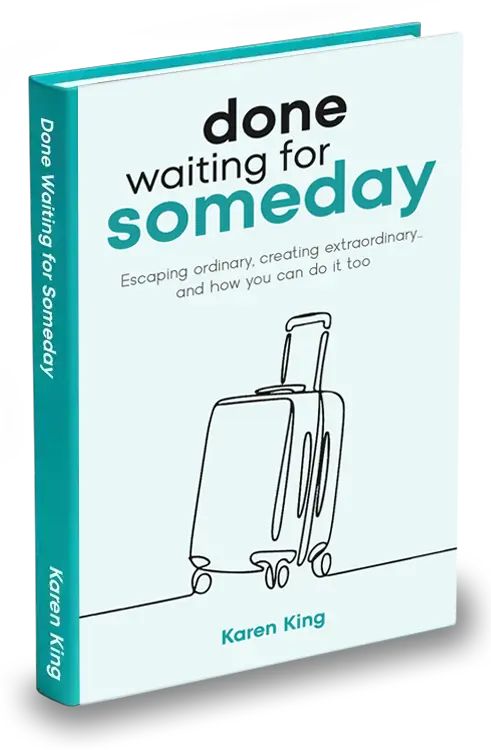
Done Waiting for Someday
The step-by-step path to turning the business you have into the freedom you want.
Get the book →Join The Escape Club
Support, accountability and a room full of people building freedom-first businesses alongside you.
Join the Club →