
The Entrepreneur Mindset of Women Whose Businesses Work
A client pays an invoice without you chasing it. Another one books before you've finished writing the email. And instead of feeling the win, you feel the pause. You're waiting for the catch, half-convinced something's about to go wrong because things rarely run this smoothly.
That pause is worth looking at, because the women whose businesses actually work don't carry it the way you might expect. The entrepreneur mindset that keeps a working business working isn't relentless optimism or believing harder. It's the ability to read what's in front of you calmly, make decisions before you feel ready, and keep going when a month comes in soft. Most mindset advice sells you the feeling and skips the habits that produce it.
What is the entrepreneur mindset, really?
Let me give you the plain version, because the internet has made this needlessly fluffy. The entrepreneur mindset is the set of habits and beliefs that let you make decisions under uncertainty, recover when something doesn't work, and keep moving without needing a guarantee first. That's all it is.
Notice what's not in there. There's nothing about feeling confident all the time, never doubting yourself, or your thoughts creating your revenue. Those ideas sell courses, but they've left a lot of smart women wondering why the gratitude journal didn't pay the mortgage.
The women who've made their businesses work do something steadier and far more useful. They treat their business like a set of levers they can read and adjust, rather than a mood they have to maintain. The confidence is a side effect of that, not the cause of it.

Curious which habits you already have?
My free Reality Check takes a few minutes and shows what's working and the next thing to change. If you want an honest read on where your business is strong and where it's leaking before you go any further, start with The Reality Check and let it do the diagnosing for you.
Why positive thinking isn't the engine
Here's what the mindset industry won't tell you. Pure positive thinking can leave you worse off. Research gathered by psychologist Gabriele Oettingen found that people who fantasised about reaching their goals put in less effort and achieved less than those who also confronted the obstacles in their way (Psychology Today). Your brain treats the fantasy as if it already happened and lets you off the hook without you noticing.
So the women whose businesses run well aren't more positive than you. They've paired the vision with the reality. They know what they want and they know what's genuinely in the way right now, and they look at both without flinching.
If vision boards are part of how you work, the fix isn't to bin them. It's to use the kind of vision board for business that actually moves you forward, the one that names the next real action instead of only the dream outcome. Vision points the direction. The habits below are what get you there.

The entrepreneur mindset habits you can copy
A mindset that survives a hard month has a few traits, and none of them are about relentless positivity. These are the habits I see in the women who've made it work, and you can borrow every one of them.
They read the numbers calmly. A slow week is data, not a verdict. When something dips, they look at it the way you'd read a weather report: useful information, not a personal attack. The skill is checking your figures on a set day, same time, same place, without dread attached to the ritual.
They separate the data from the story. "Revenue is down 15 per cent this month" is data. "I'm not cut out for this" is a story you've stapled onto the data. The habit is catching yourself in the act and peeling the two apart, so you respond to the number rather than the fear.
They decide before they feel ready. You'll never have perfect information. Waiting for it is just fear wearing a sensible coat. Getting comfortable with making business decisions without perfect information is most of what separates a working business from one that keeps second-guessing itself. Set yourself a deadline to decide, gather what you reasonably can before it, then commit.
The questions a working business owner actually asks
Instead of "how do I get more motivated," the women whose businesses run well ask sharper questions:
Where is the money leaking out, or never coming in? Is it pricing, the offer, or simply not enough people seeing it?
Is the model itself capable of giving me freedom, or am I trading hours for dollars with a nicer logo?
What am I doing out of habit that no longer serves the business?
What do I keep avoiding because it's uncomfortable, not because it's unimportant?
That last one is where the real answers hide. If the work has slowed, the honest fix is often in getting more clients when the enquiries dry up, and that usually means sharpening the offer or the visibility, not sharpening your attitude.
How do you keep an entrepreneur mindset through a slow month?
Recovery is the part nobody puts on the vision board. Every working business has flat months. The difference is what the owner does inside them.
They protect their focus like it's the business asset it is. This is the one that changed everything for me. The freedom I have now didn't arrive when I got more positive. It arrived when I stopped chasing every new idea and committed to one thing long enough for it to work.
I got my ADHD diagnosis in 2023, and the whole pattern finally made sense. I come alive on novelty and suffocate in routine, which meant I'd start one thing, get bored, and bolt for the next shiny idea before the first had a chance. The shift wasn't believing in myself harder. It was understanding how my own brain works and building the business around it instead of fighting it.
For me that meant one offer, one audience, and a hard rule against starting anything new until the current thing was actually finished. Your version might look different. The principle holds: pick the lever, stay on it long enough to read the result, and don't let a slow fortnight talk you into blowing it all up.
A practical recovery habit: when a month comes in soft, give yourself one week to feel it, then switch to a single question. What's the one change most likely to shift the next month? Make that change and leave everything else alone.

What the hustle version of this mindset gets wrong
The loud version of this mindset is all grind. Out-work everyone. Sleep when you're dead. Sacrifice now so you can live later. For a woman trying to build something that gives her a life, that advice works against her, because it assumes the goal is the business rather than the freedom.
You didn't build this to have a more demanding boss who happens to be you. A lot of standard business wisdom was written by and for people who want to scale at any cost, which is exactly why traditional business advice doesn't work for ambitious women who want money and their weekends back.
The right way to think about it asks a different question. Not "how big can this get" but "how free can this make me, and what's the smallest version of the business that delivers that." Sometimes the shift is permission to want less complexity rather than more.
Mindset is downstream of the model
Here's the bit worth tattooing somewhere. You cannot mindset your way out of a business model that structurally can't pay you. If the maths doesn't work, no belief on earth will fix it.
The women whose businesses run well understand this in their bones. They put their energy into the vehicle first and their attitude second, because an attitude bolted to a broken model just produces a very positive person going broke.
So before you buy another mindset course, look hard at the structure. Then let the way they think do the thing it's genuinely good at: carrying you through the discomfort of changing it.
Frequently Asked Questions
What is the entrepreneur mindset in simple terms?
It's the ability to make decisions under uncertainty, recover when things don't work, and keep acting without needing a guarantee first. It's clear-eyed about reality and willing to change course, rather than relentlessly positive.
Can mindset alone keep a business running?
No. If your business model can't structurally pay you what you need, no amount of mindset work will fix that. Mindset helps you face the problem and change the model; it doesn't replace fixing the model.
Why isn't positive thinking enough for entrepreneurs?
Research shows fantasising about success can reduce the effort you put in, because your brain treats the fantasy as a reward already earned. Pairing the vision with the real obstacles in front of you works far better than positivity on its own.
How do I hold the entrepreneur mindset through a slow month?
Read the numbers as data rather than a verdict, separate the facts from the story you've built around them, and commit to one change most likely to shift the next month. Focus beats belief.
If you felt that pause when the money came in easily, it's a good sign you've started doing something right and haven't quite trusted it yet. The fastest way to trust it is to get an honest read on which of these habits you already have and which one to build next. Start with The Reality Check, see what's working, and move on the next thing. The freedom you built this for is already closer than the pause lets you believe.

Karen King, Founder of The Escapepreneur® & ESC Hub
Karen King is the founder of The Escapepreneur® and the woman behind the term. After burning out running a six-figure cake business in Australia, she sold everything, left the country, and spent the last 10 years building a freedom-based business across 60+ countries. On No More Somedays, she writes for the online business owner who is smart, tired, and done with waiting for someday to arrive. Honest, practical, zero hype.
Take the Reality Check
Working hard but going nowhere? Answer 10 quick questions and find out what's really been holding you back — and where to start.
Start My Reality Check →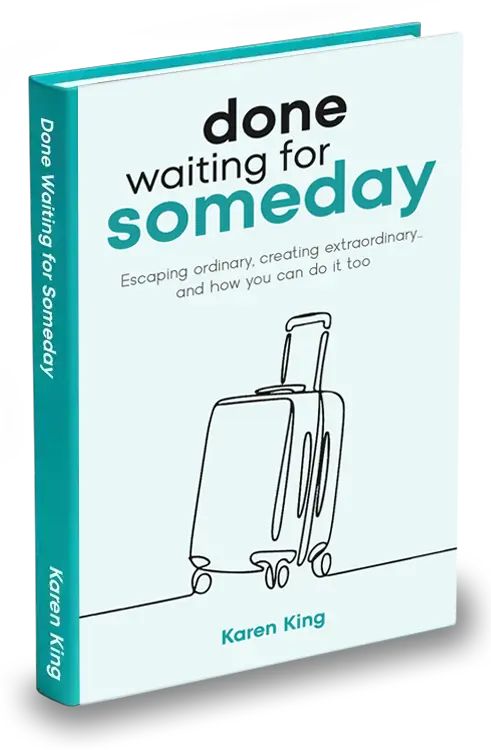
Done Waiting for Someday
The step-by-step path to turning the business you have into the freedom you want.
Get the book →Join The Escape Club
Support, accountability and a room full of people building freedom-first businesses alongside you.
Join the Club →