

How to Choose a Coaching Niche When You're Already In Business but Stuck
You already coach. You've had clients, maybe good ones. But the money hasn't followed the way you thought it would, and when someone asks what you do, you give an answer that even you don't fully believe. That's usually the real reason you're stuck on how to choose a coaching niche - not because you don't know your options, but because you've been afraid to pick one and lose the rest.
To choose a coaching niche that actually pays, you name the specific person you help and the specific result you get them - not the topic you're interested in. A niche is a promise to one kind of client, not a category on a drop-down menu. Get that wrong and no amount of posting, funnels or free discovery calls will fix it.
I've watched a lot of smart women stay broad because broad feels safe. It isn't. I did a version of this myself, and it cost me years.
Why "how to choose a coaching niche" is the wrong first question
Most of the advice treats this like a menu problem. Pick health, or relationships, or business, or mindset. Then narrow it. Then narrow it again until you land on something like "confidence coaching for corporate women."
That's not a niche. That's a label. And a label doesn't make anyone reach for their wallet.
A niche is defined by three things: who you help, the specific problem they'll pay to solve, and the outcome you can point to. If you can't finish the sentence "I help [this person] go from [painful now] to [specific result]," you don't have a niche yet. You have an interest.
This matters because people don't buy coaching. They buy the result. Nobody wakes up wanting "mindset support." They wake up wanting to stop dreading Sunday nights, or to finally raise their prices without their voice shaking. The niche lives in the result, not the topic.

The real reason your coaching niche isn't landing
Here's the pattern I see over and over. You stayed broad on purpose, telling yourself you'd niche down "once you got clearer" or "once the money was steady." So you help women with confidence, and also time management, and also launching, and also self-worth, because saying no to any of it feels like leaving money on the table.
The opposite happens. When you speak to everyone, you land on no one. The woman scrolling past can't tell if you're for her, so she keeps scrolling.
I know this fear intimately. My cake business started as an accidental Facebook page when my daughter was eight weeks old - 100 followers and nine orders in 48 hours. I said yes to everything: wedding cakes, birthday cakes, corporate orders, last-minute panic jobs. It grew to around 50,000 followers and multiple six figures, and it became a prison. Seventy to eighty hour weeks, almost working for free while copycats undercut me. I'd built something big and shapeless, and shapeless doesn't protect you.
Broad isn't generous. It's just undecided in a nicer outfit.
How do you choose a coaching niche that actually pays?
Stop starting with what you're passionate about. Start with what people already pay you for, complain to you about, or ask you the same question three times about.
Run through these in order:
- Who already gets results with you? Look at your best past clients - not your favourite topics, your best outcomes. What did those people have in common?
- What did they pay to fix? Write the problem in their words, not yours. "I can't switch off from work" beats "boundary coaching" every time.
- What can you prove? A niche you can back with a real before-and-after is worth ten niches you find intellectually interesting.
- What can you say without cringing? If describing your niche makes you shrink, it's wrong for you - even if it looks profitable on paper.
The overlap of those four is your niche. Not the biggest circle. The honest one.
When I sold home security in Australia at 21, I was the top salesperson on $120k a year, and I was terrible at pushy tactics. What I was good at was solving one specific problem for one specific person - a family who wanted to feel safe at night. It never occurred to me anyone would say no, because I wasn't selling a category. I was selling the result to the person who needed it. That's the whole game.
Passion vs profit: which one picks the niche?
Neither, alone. Passion with no demand is a hobby. Demand with no interest from you is a job you'll quit. You want the spot where a paying problem meets something you can stand to do for years.
This is where a lot of coaches get stuck. They chose the niche they thought would sell, and now they resent every client. Or they chose the one they loved, and it doesn't pay. I've written before about why loving what you do isn't paying you yet, because the gap is almost never the passion - it's that the passion hasn't been pointed at a problem someone will pay to end.
According to the International Coaching Federation's global study, the coaching profession generated an estimated US$4.564 billion in revenue in 2022, up 60% since 2019. The market is not the problem. The market is growing. If you're not getting paid, it's a positioning problem, not a demand problem.

Why niching down feels like torching everything (and why it isn't)
The loudest objection I hear: "If I niche down, I'll cut off all the other people I could help." Yes. That's the point.
You're not deleting your skills. You're deciding what to lead with. You can still take the odd off-niche client. But the message that pulls strangers in has to be sharp enough to make one person feel seen.
Choosing a coaching niche isn't a permanent tattoo either. It's the version you commit to now, fully, so you can actually test whether it works. Half-committing to five niches teaches you nothing. This is the same trap I keep coming back to around picking one thing when you're stuck doing everything - the doing-everything is what's keeping you poor, not the market.
If the fear is more "I've been broad for so long, narrowing now feels like starting over," it isn't. There's a clean way to niche down when you're already years in without torching everything - you keep the audience you've earned and just sharpen the promise you make them.
My ADHD brain hates this, for the record. I love novelty and I've resisted narrowing my whole life. I did the right things in the wrong order for years, and the financial struggle came from never sticking to one thing. The freedom only showed up once I finally focused. Not before.
How to test a coaching niche before you commit
You don't need to be certain. You need to be committed enough to run a real test. Certainty comes after the test, not before it.
Pick your best-guess niche using the four questions above. Then:
- Say it out loud to real people. Watch their faces. The right niche makes someone say "oh, that's me" or "my sister needs you." A blank nod means keep sharpening.
- Sell it before you build it. Offer it to a handful of ideal-fit people at a real price. If nobody bites, the niche or the offer is off - and that's cheap information.
- Give it a proper run. Not two posts and a panic. Long enough to see if the right people show up and pay.
- Watch what you keep dodging. If you're avoiding selling it, that's data too. Sometimes the niche is right and the fear is the real block.
A quick word on that last one. Sometimes the niche is fine and it's your nerve that's gone. If your work has stalled and you can feel yourself hesitating everywhere, it might not be positioning at all - it might be that your confidence dropped after years in the business, and that's a different fix.
What to do once you've chosen your coaching niche
Once you've picked it, everything downstream gets easier. Your content writes itself because you know exactly who's reading. Your offers stop being a buffet. Your pricing firms up, because a specific result is worth more than vague help.
The mistake is treating the niche decision as the finish line. It's the starting line. The niche just tells you where to point all the effort you were already spreading too thin.
Commit to one promise, to one person, and give it a real run. That's how you choose a coaching niche that finally pays you - not by finding the perfect category, but by being brave enough to be for someone.
Frequently Asked Questions
Can I have more than one coaching niche?
Eventually, yes - but not while you're stuck. Pick one and get it working first. A second niche you add from a position of "this one already pays" is fine; two half-built niches at once is just being broad with extra steps.
What if I choose the wrong coaching niche?
Then you've learned something real and you adjust. A niche is a decision you test, not a life sentence. The far bigger risk is staying broad for another year because you're scared of picking wrong.
Should my coaching niche be based on my own experience?
It's a strong starting point, because you understand the problem from the inside and can prove you got through it. But check that other people actually want to pay to solve it - your story plus real demand is what makes a niche work.
How narrow is too narrow for a coaching niche?
Too narrow is when the specific person you describe barely exists or can't afford you. If there are plenty of them and they've paid to fix this problem before, you're not too narrow - you're finally specific enough to be noticed.
You already know this business can give you the freedom you want. What's missing isn't belief, it's a sharper decision about who you're for. If you want help finding exactly where your coaching business is leaking money and momentum, start with The Reality Check - it's built for exactly this, the moment when you've been at it a while and need to know what to change rather than what to try next. Pick your person. Make the promise. Then go and get paid for it.

Karen King, Founder of The Escapepreneur® & ESC Hub
Karen King is the founder of The Escapepreneur® and the woman behind the term. After burning out running a six-figure cake business in Australia, she sold everything, left the country, and spent the last 10 years building a freedom-based business across 60+ countries. On No More Somedays, she writes for the online business owner who is smart, tired, and done with waiting for someday to arrive. Honest, practical, zero hype.
Take the Reality Check
Working hard but going nowhere? Answer 10 quick questions and find out what's really been holding you back — and where to start.
Start My Reality Check →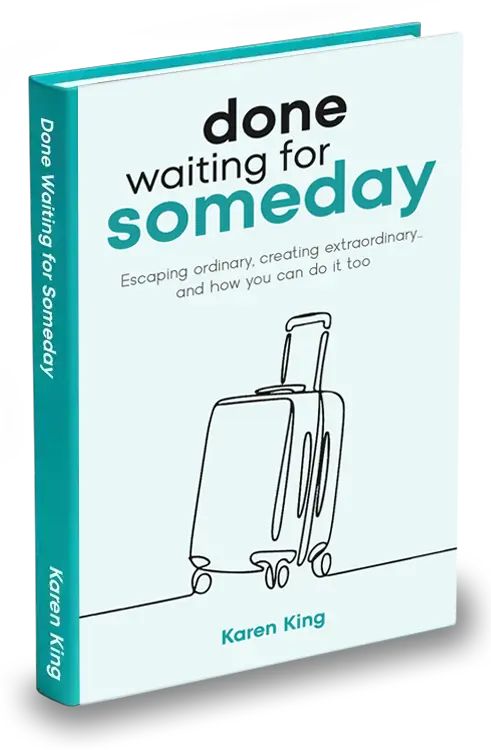
Done Waiting for Someday
The step-by-step path to turning the business you have into the freedom you want.
Get the book →Join The Escape Club
Support, accountability and a room full of people building freedom-first businesses alongside you.
Join the Club →